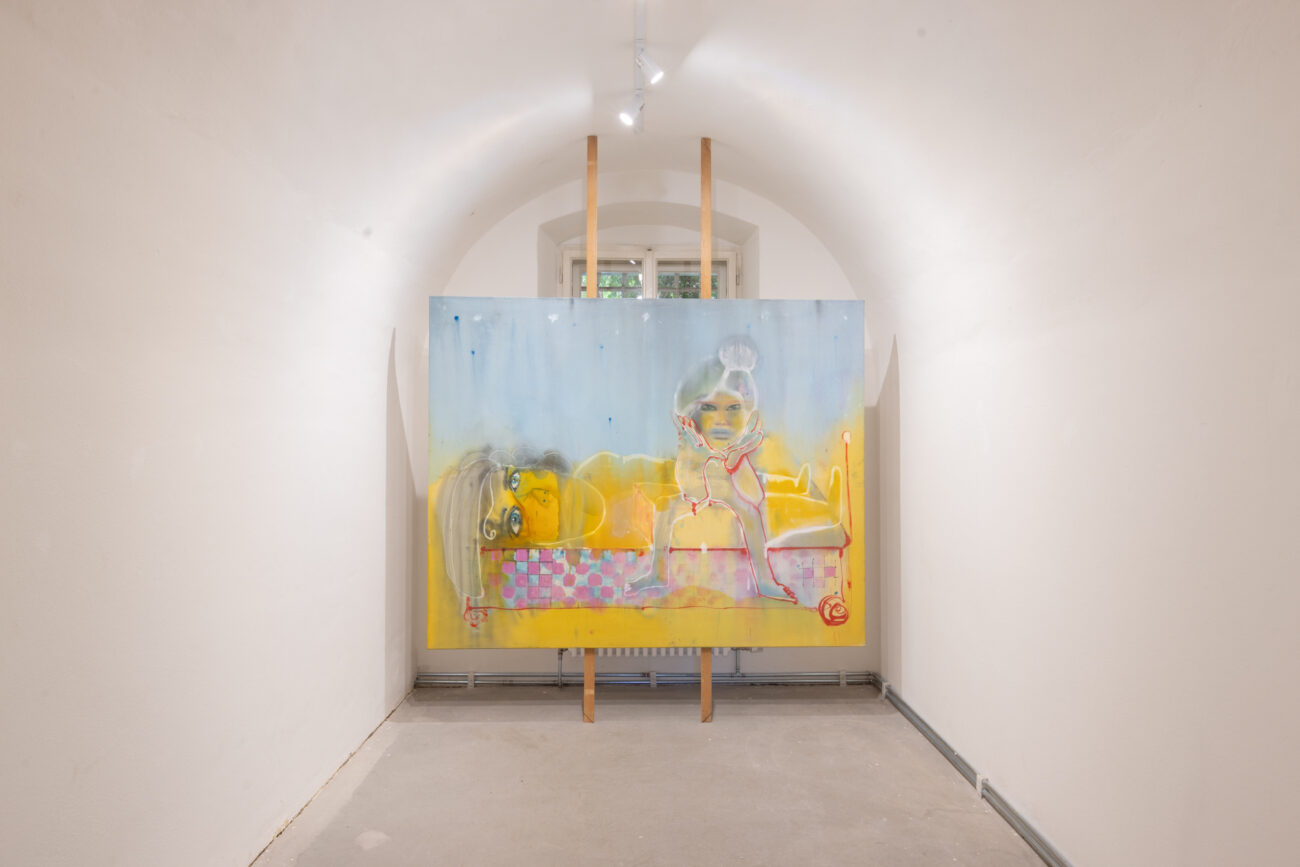
Under the title “Carved Light” two artistic approaches, that are linked both biographically and formally come together. Barbara Posch and Florian Donnerstag are from the region in Austria where the exhibition space KUBIQ is situated. They met later in Munich and have now developed a joint exhibition at a venue whose history has played a key role in shaping the concept. The former district court, whose spaces have been gradually transformed into a cultural and educational quarter since 2023, does not serve as a neutral “white cube.” The architecture, particularly the former prison cells, forms the backdrop for new works created specifically for this context. The spatial and symbolic structure of the site thus becomes a resonant space for questions of perception and order. The exhibition explores the interplay between volume, form, and line, as well as superimposition, fragmentation, and painterly densification.
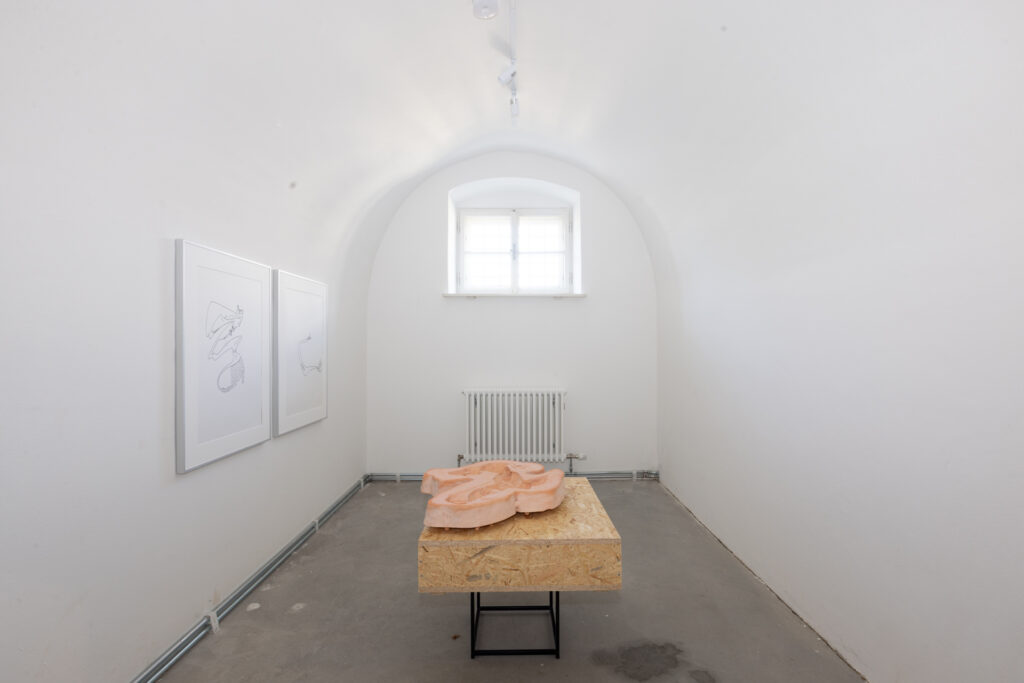
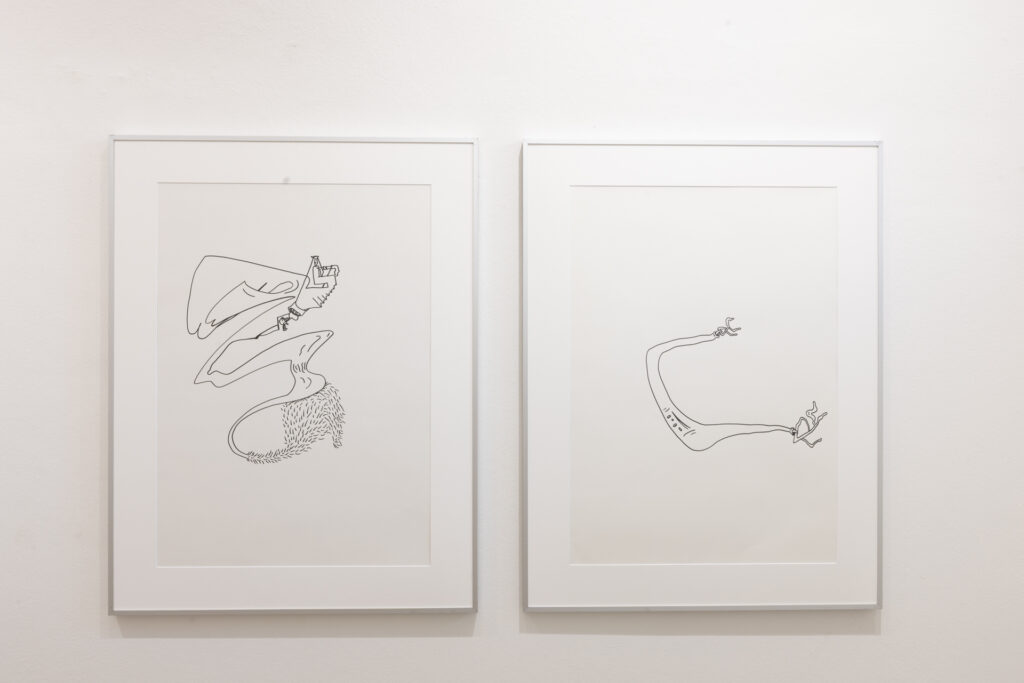
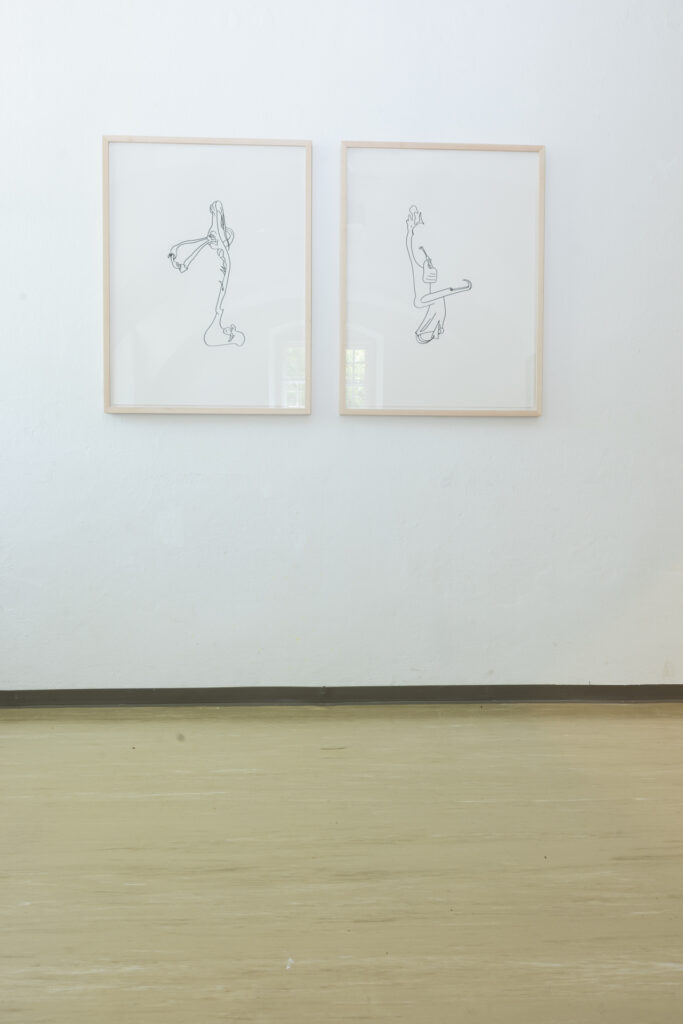
Barbara Posch’s works exist at the intersection of drawing, sculpture, and figuration. Her practice often begins with an intuitive approach to lines and forms, whose trajectories are shaped less by preconceived ideas than by a continuous process of discovery. From these gestural lines emerge forms that appear both organic and mechanical, familiar and alien at the same time. They are reminiscent of tools, cartographic systems, or models, without being confined to a specific function or scale. It is precisely this ambiguity between figuration and abstraction, between microcosm and macrocosm, that creates a productive space for projection and interpretation. For the exhibition, Posch consistently translates this open working process into three-dimensional space. Her plaster sculptures are not three-dimensional translations of her drawing strategies, but arise from the same questions about interior and exterior, positive and negative forms, and the relationship between material and void. The works appear like models of imaginary landscapes or archaeological finds of unknown architectures. At the same time, both the drawings and the sculptures possess a playful quality. Time and again, possible functions seem to emerge, as if they were tools of a world yet to be defined. This subtle humor precludes any unambiguous interpretation.
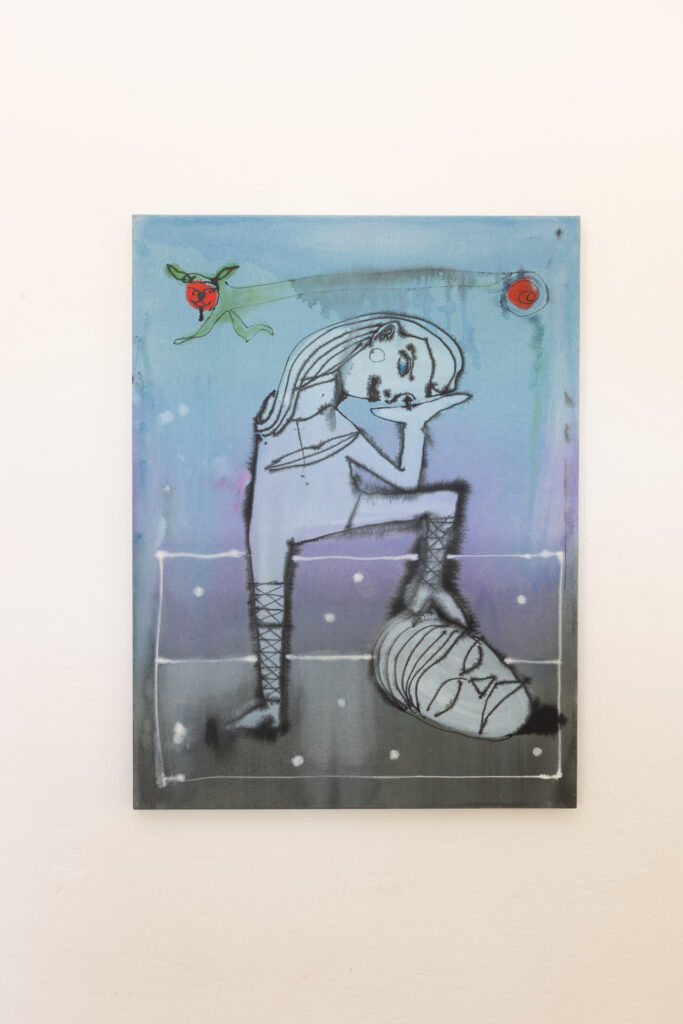
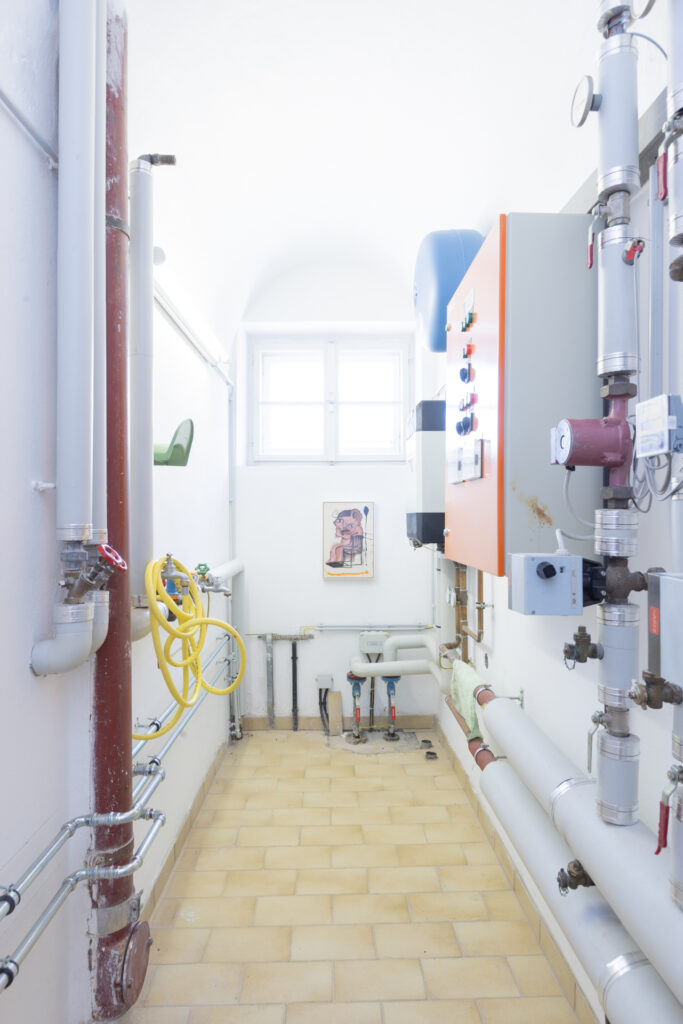
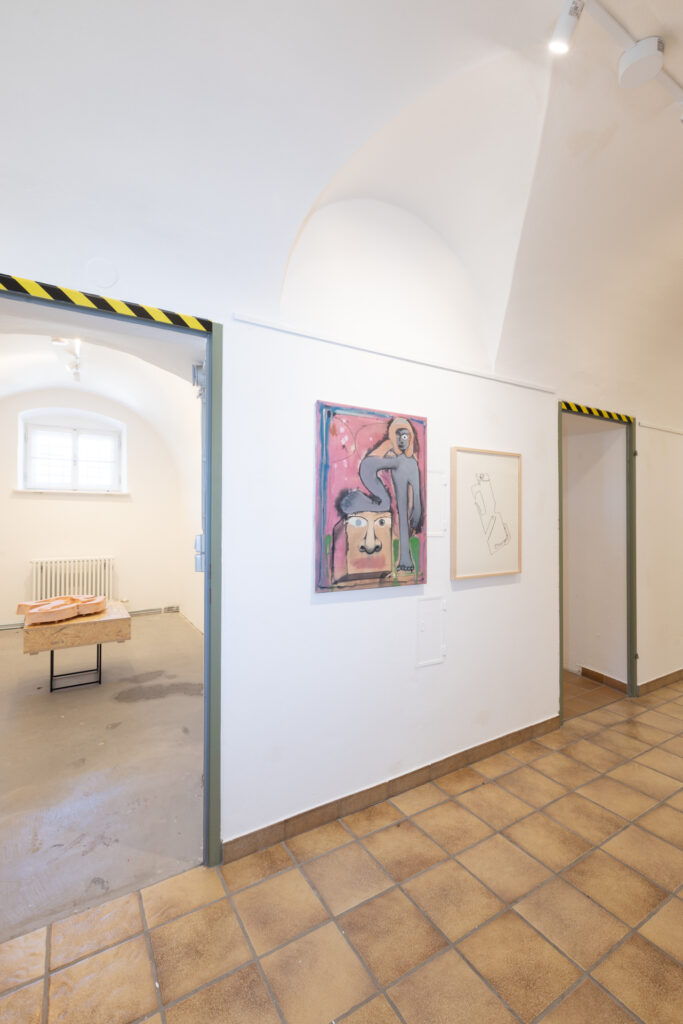
Florian Donnerstag has also created new works specifically for this exhibition and the spatial context of the KUBIQ. For years, his painting has oscillated between digital image production and analog painterly intervention. The starting point is an archive of image fragments, graphic elements, and his own motifs, which are recombined, reworked, and transformed in an open-ended process. In the works for “Carved Light,” however, this approach shifts noticeably. While earlier paintings interwove a wide variety of visual layers in a collage-like manner, human figures and portraits now take center stage. The pictorial spaces remain ambiguous and acquire a new psychological depth. The former prison cells serve as an atmospheric resonant space for these vividly colored images. Donnerstags’ figures do not appear as historical stand-ins or as narratively defined characters. Hands, gazes, and fragmented postures create situations that hint at questions of control, projection, and interpersonal relationships without being resolved narratively. At the same time, the painting itself gains a greater sense of autonomy. Color, brushwork, and materiality come to the fore more clearly, lending the paintings a physical presence that does not supplant the previously dominant digital structure but rather transforms it into a hybrid balance.
The exhibition compares these different artistic approaches not through formal similarities, but through a shared perspective: space is not viewed as a given container, but as something that is constituted in the process of perception. At KUBIQ, this gives rise to an exhibition that further explores the transformation of the former courthouse on an aesthetic level. Light, materials, and architecture become active components of an open space of experience in which past and present, memory and imagination are brought into relation with one another.
KUBIQ Thalgau – Kultur- und Bildungsquartier, Wartenfelser Straße 5, 5303 Thalgau