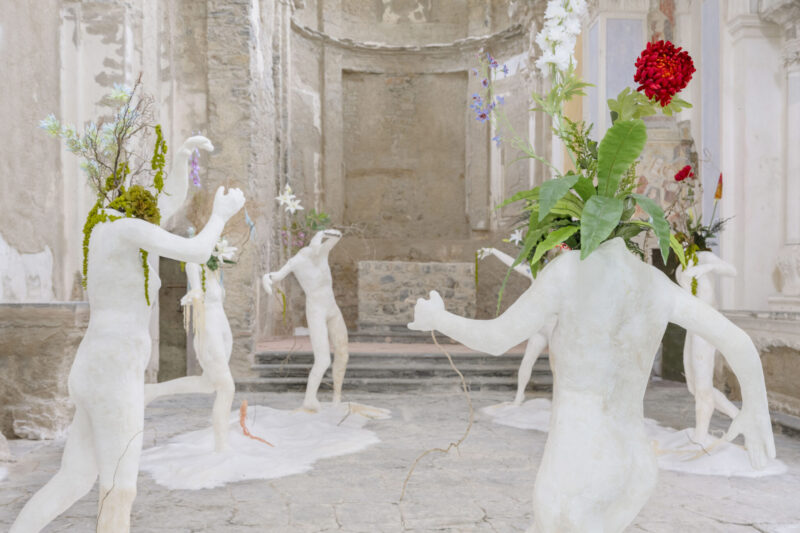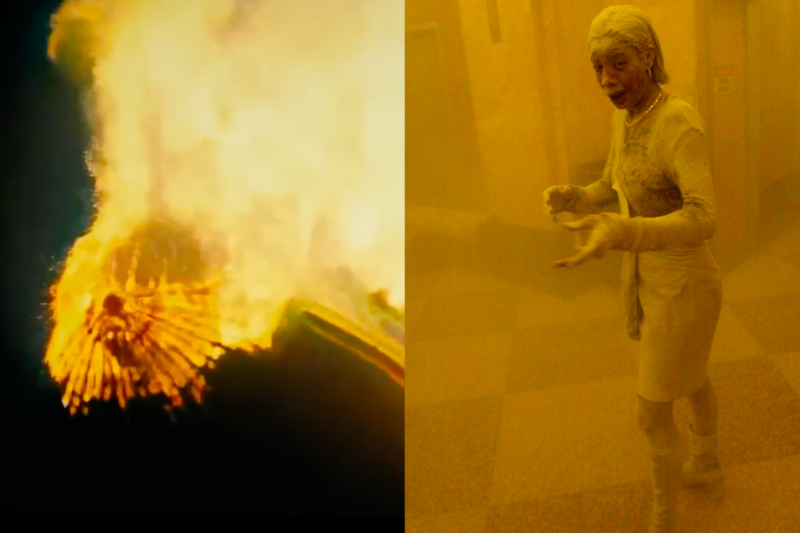
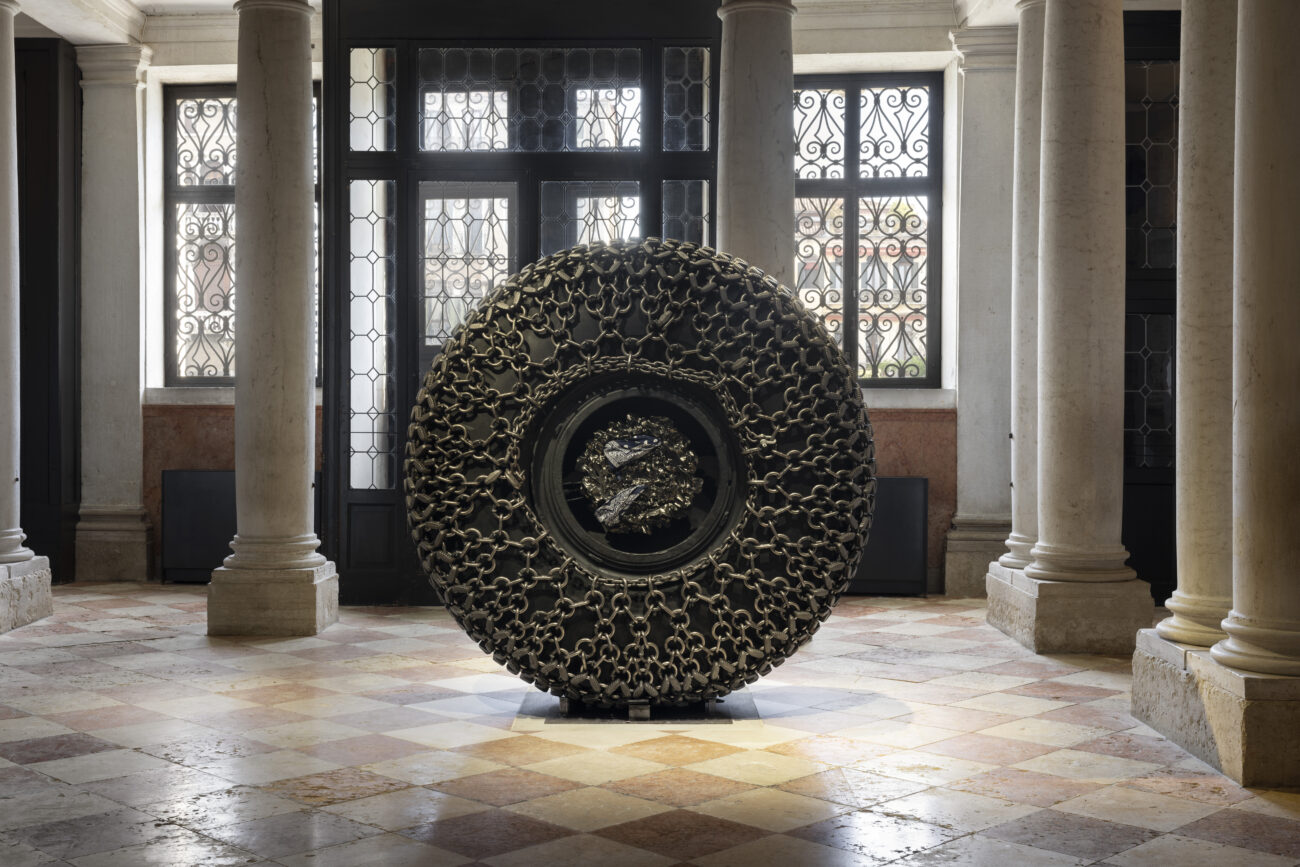
Some have described the exhibition as the actual American Pavilion at this year’s Venice Biennale. And indeed, ‘Helter Skelter’ at the Fondazione Prada paints a multi-layered picture of America’s complex society. The works by Arthur Jafa and Richard Prince oscillate between pop-cultural appropriation, violence, lust and longing. Although this is the first joint exhibition by the two artists, their approaches complement one another in a striking way.
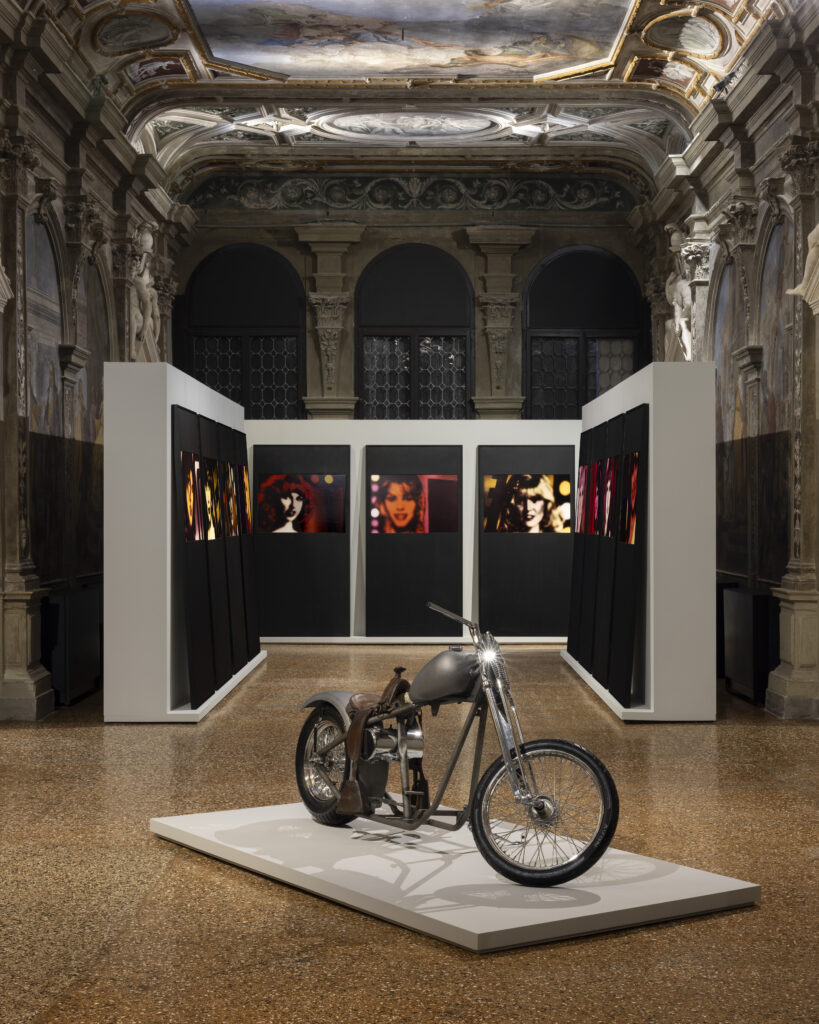
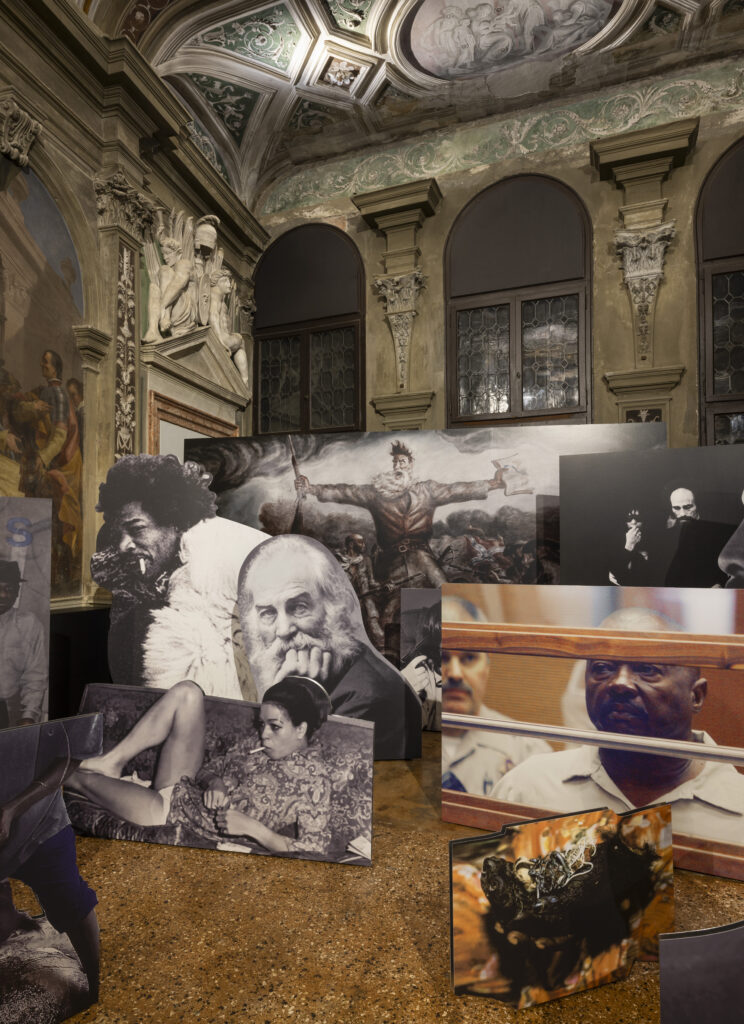
As soon as you reach the first floor of the imposing Ca’ Corner della Regina, you enter a web of references to the American world of imagery and mythology. Two works, positioned opposite one another, each playing with cultural icons in their very own way. With “Viriconium”, Arthur Jafa presents a new version of his multi-part sculpture “___Array” from 2020. It forms a collage of the artist’s identity, through which he interweaves cultural references and influential figures. The aluminium cut-outs, some of which are printed on both sides, evoke American history, which is characterised by violence, struggles for social justice and, at the same time, extraordinary creativity. Figures such as the political activist Angela Davis, the jazz singer Billie Holiday and the poet Walt Whitman appear alongside images from art history and contemporary media. This pluralistic compilation brings together ethnic groups, generations and disciplines, much like the proverbial melting pot. In contrast, a work by Richard Prince depicts very different American icons. The artist has removed the engine from a modified Harley-Davidson motorbike, but has instead strapped a riding saddle onto the machine. Cowboys and rockers come together here, along with their dream of boundless freedom, a dream that is, however, always linked to violence, oppression and the displacement of others.
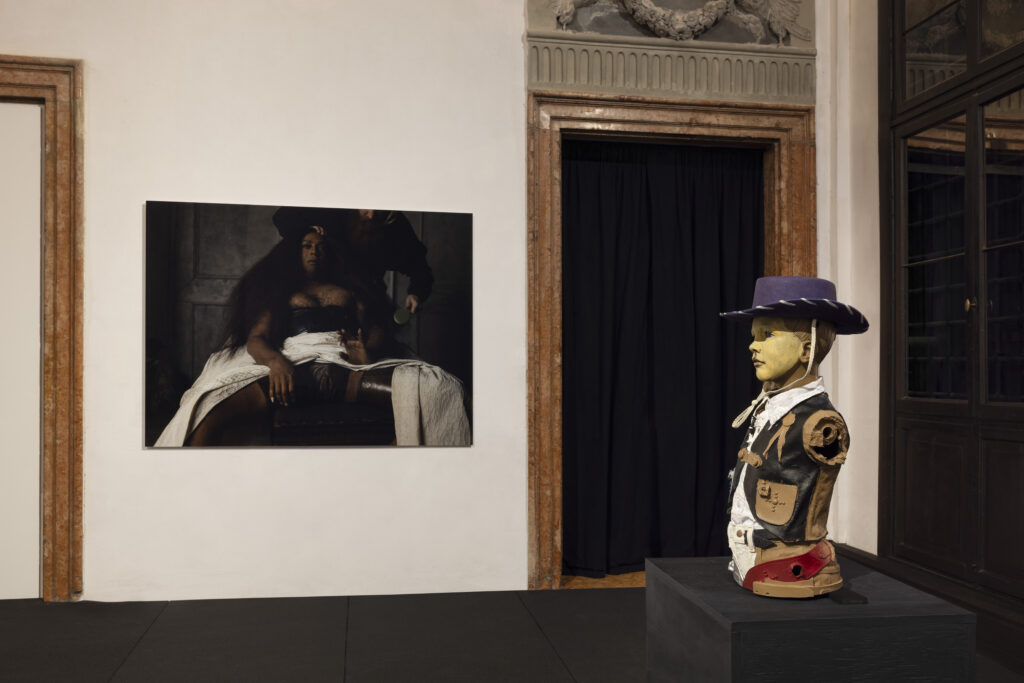
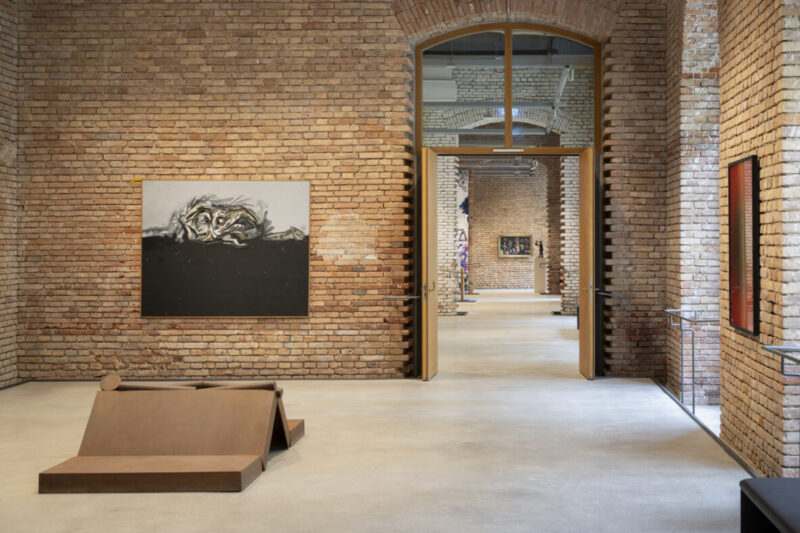
With this juxtaposition curater Nancy Spector sets the tone for ‘Helter Skelter: Arthur Jafa and Richard Prince’. More than fifty photographs, videos, paintings, sculptures and installations are spread across the ground floor and first floor of the Venetian palazzo. It is the first exhibition to bring the two artists together in this way. Drawing from different historical and social backgrounds, the two artists have developed a similar set of tools with which to engage with their respective worlds. Both collect, appropriate, reposition and assemble images and ideas that are already part of a collective narrative.
Since the late 1970s, Richard Prince has used photographs from advertising and the mass media, thereby fundamentally challenging the concepts of authorship, originality and ownership. Arthur Jafa also works with found material, though his sources range from YouTube and news programmes to music videos, historical photographs and private image archives. His work centres on the question of how Blackness can be represented in visual media. Both artists treat visual culture as material that already exists and therefore does not necessarily need to be produced anew. Prince, born in 1949, developed his visual language from the archives of American consumer and entertainment culture: advertising, motorbikes, cowboys, pornography, rock music and celebrity. Jafa, born in 1960, draws on the same American image machine, but from a perspective shaped by the history of racism and exclusion. In the exhibition, the various works by both artists are presented side by side, organised by theme. Ambiguities arise here between the works, in their interplay.
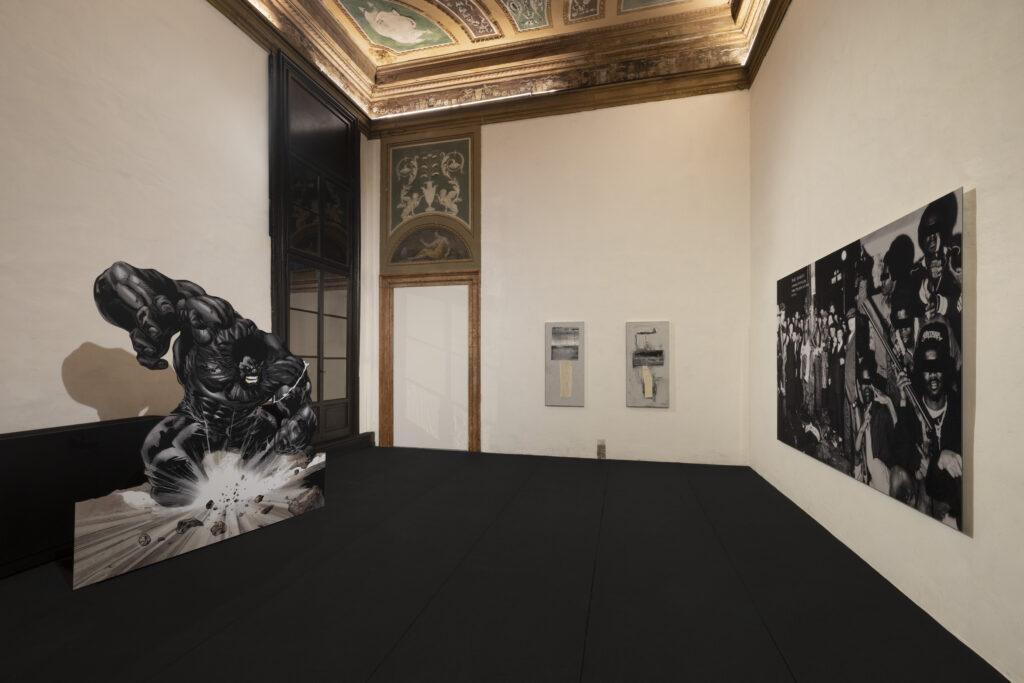
Both artists explore questions of identity and culture, violence and structural injustice through the methods of appropriation. Even the title itself is a transformation of an appropriated idea. ‘Helter Skelter’ originally referred to a fairground ride and later became synonymous with chaos. Paul McCartney enshrined the term in pop history in 1968, whilst Charles Manson made it the rallying cry of his racist apocalyptic fantasy. At the same time, the title alludes to the 1992 exhibition of the same name at the Museum of Contemporary Art in Los Angeles, which largely excluded Black artists. Jafa and Prince have now taken this cultural artefact, reinterpreted it and placed it in a new context, giving it a new layer of meaning.
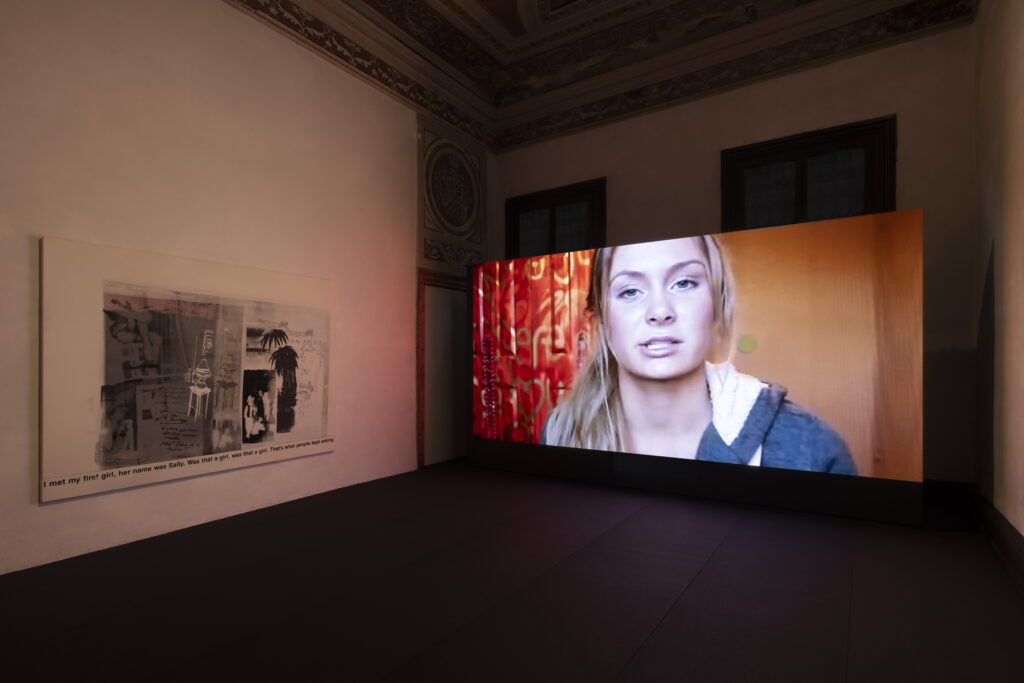
Arthur Jafa and Richard Prince are both meticulous analysts of the culture around them, yet they have very different approaches to interpreting culture. In the exhibition, they each present multiple layers of complex overlaps. Pop culture and violence, freedom and property, desire and exploitation, light-hearted humour and hurtful racism lie in close proximity. Both artists use existing material, alter its context and alienate it sufficiently to enable a fresh perspective on the seemingly familiar. The exhibition presents a 20th- and 21st-century American culture that is fragile, multi-layered and ever-evolving. The fact that such an autopsy of the American Dream can be viewed within the prestigious Venetian architecture of the Ca’ Corner della Regina creates a stark contrast that only serves to sharpen the viewer’s perspective even further.
On view until 23 November 2026
Fondazione Prada Ca’ Corner della Regina Calle de Ca’ Corner Santa Croce 2215 30135 Venezia