In the temporary exhibition space of the Sammlung Goetz in downtown Munich, Cindy Sherman’s multifaceted body of work coalesces into a precise exploration of role models, clichés, and self-presentation. In a present-day world permeated by rapidly circulating images and constant self-presentation on social media, Sherman’s photographs seem more relevant than ever. The artist conceives of identity as something one can adopt, alter, and discard. In doing so, she always retains complete autonomy over her performative self-presentation and the images she creates of herself.
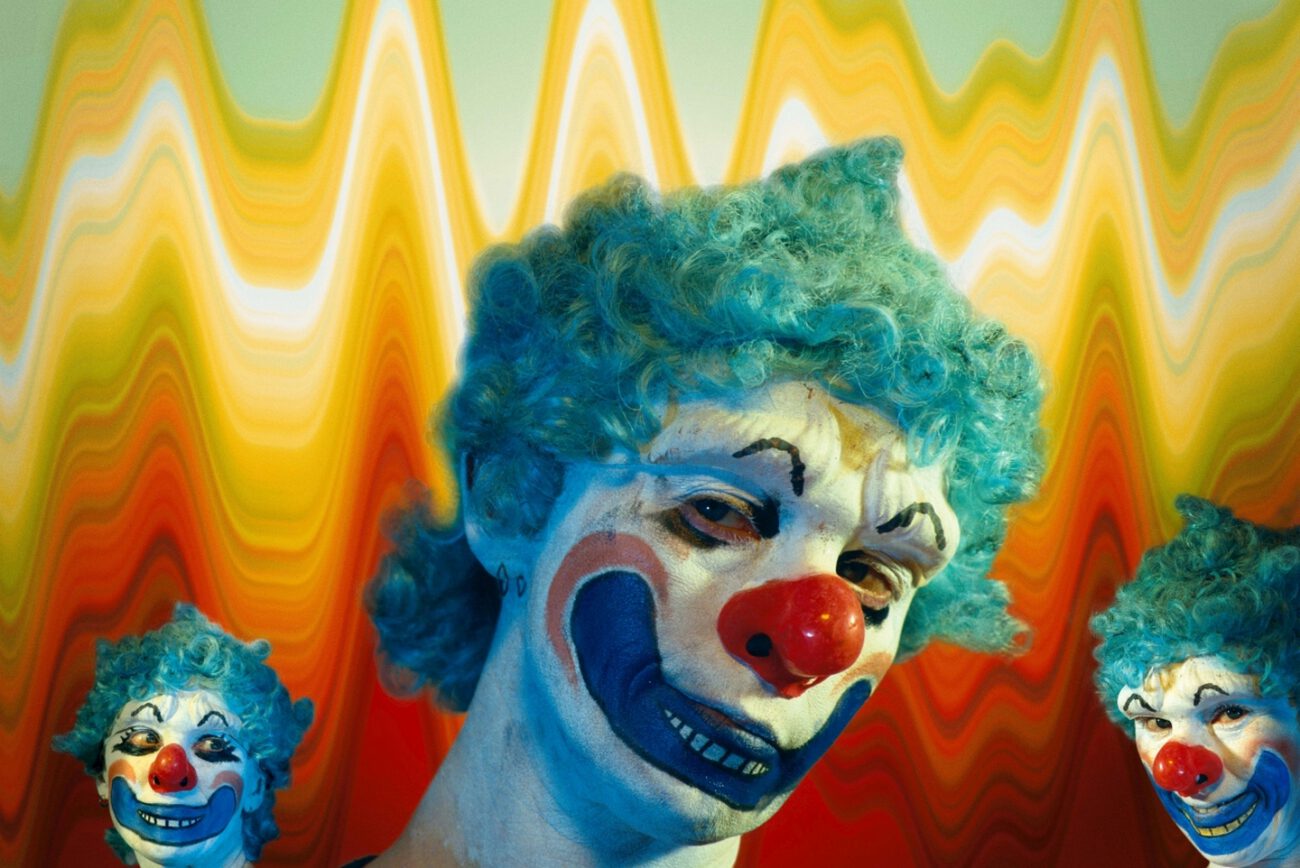
The three clowns wear red noses; their lips—oversized and painted blue—stretch across their entire grotesque faces. Their hair is also blue and tousled. They gaze at the viewer with an eerie smile. It is the same face, repeated three times, staring at the viewer with malice. Despite the smiles, it’s unclear how this ambivalent masquerade is meant to be interpreted—whether they are harmless, funny Auguste-style clowns or whether one is, in fact, being stared at by malevolent horror clowns. These ambivalent clown figures remain elusive, their masks hovering between role, cliché, and concept. And the question also arises: Who exactly likes to dress up as a clown, and with what intention? In this case, it is the American artist Cindy Sherman.
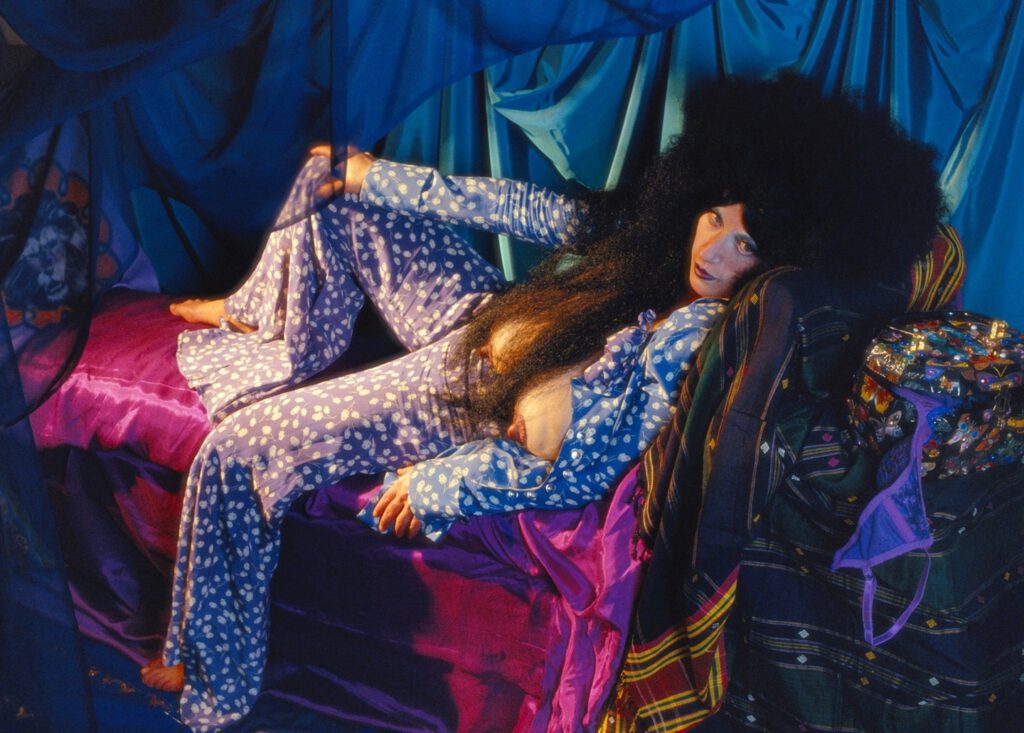
The photograph is on view in the current exhibition in the temporary space of the Goetz Collection. The show provides a condensed overview of key aspects of the artistic strategies of one of the most influential contemporary photographers. The exhibition was curated by Karsten Löckemann, chief curator of the Goetz Collection, and Anna Reimnitz. The densely hung presentation makes no claim to retrospective completeness; rather, the selection offers insight into Sherman’s various approaches to masquerades, as well as the media-driven reshaping and deconstruction of female roles.
Since the late 1970s, Sherman’s artistic strategy has consistently focused on the question of how identity is produced through images. Her photographic self-staged works are not simply self-portraits. Rather, they are complex photographic compositions in which she acts simultaneously as model, director, makeup artist, and photographer. Even in her well-known early series “Untitled Film Stills,” in which she embodies stereotypical female characters from fictional film scenes of the 1950s and 1960s, the primary focus was not on individual subjectivity but on the analysis of culturally constructed stereotypes. In later bodies of work, the focal points shift: the figures appear increasingly artificial and grotesque; they elude clear categorization and at times seem intangible.
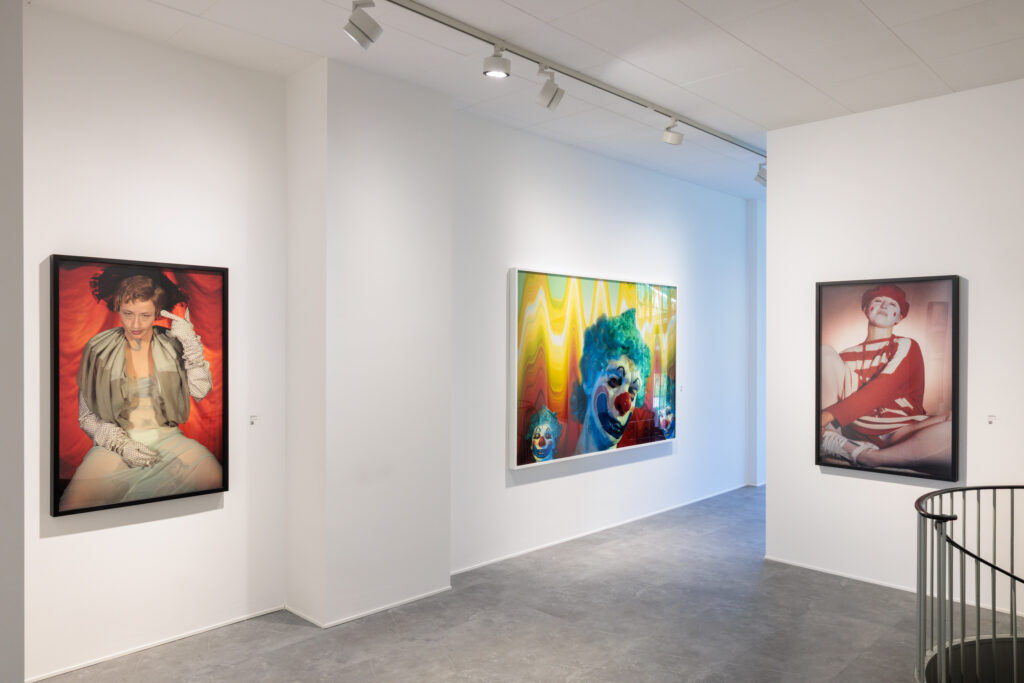
The Goetz Collection in Munich holds extensive collections spanning nearly every phase of the artist’s more than 50-year career. A key focus of the current exhibition is on images created between 1983 and 1994 that explicitly engage with the visual language of the fashion world and can be situated at the intersection of art and commercial image production. In addition to her own artistic works on the theme of fashion, Sherman has repeatedly published photographs outside the art context and created photo spreads for fashion magazines and various brands such as Comme des Garçons and MAC Cosmetics. Yet even here, she safeguards her artistic autonomy. Instead of conforming to her clients’ expectations, she subverts their visual logic.
Sherman’s images exaggerate and distort the commercial codes of glamour and desirability. The figures are unsettling; proportions seem shifted; poses veer into the unnatural; gazes remain vacant or appear expressively exaggerated. Clothing, which in fashion discourse typically functions as a vehicle for elegance or desirability, appears here as an alien shell that no longer corresponds to the body but rather deforms or overlays it. However, the term “anti-fashion,” often used to describe this, actually falls short of adequately capturing this strategy. Sherman mirrors, inverts, and exaggerates the mechanisms of the fashion industry in a kind of critical mimicry.
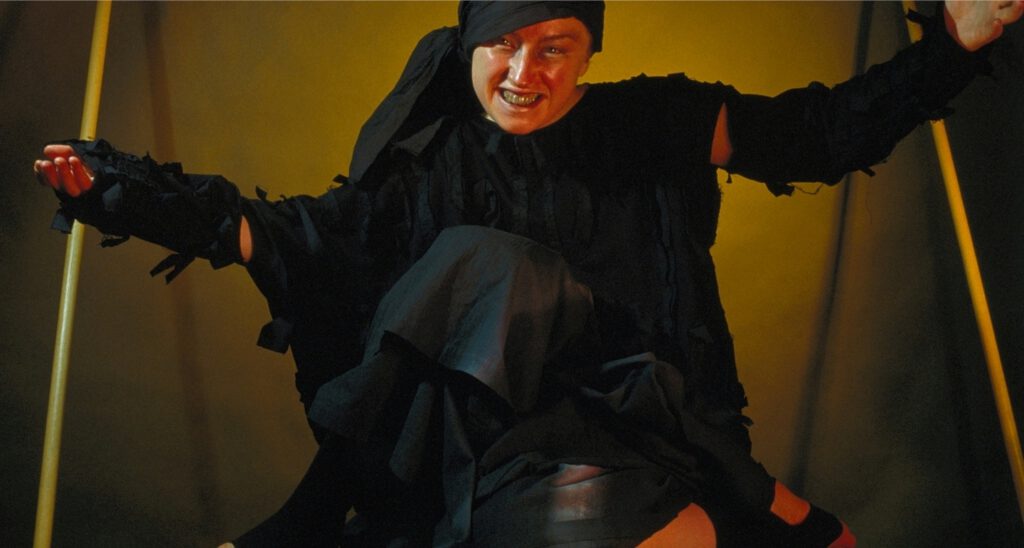
Cindy Sherman’s images can be seen as a suitable analytical tool that reveals and subverts the mechanisms, modes of operation, and conditions of visual cultures. Just as a clown makes rules and systems of power visible by breaking them and exaggerating them to the point of ridicule or absurdity, Cindy Sherman, through her stagings of the self as an immanent disruption, undermines the modes of operation of existing role-based and image-based logics.
Sammlung Goetz / Schaufenster, Pacellistraße, 580333 München