Appropriation, assimilation and gentrification. In her current exhibition “Fully Automated Orientalism” at the Interimsquartier of the Villa Stuck, Anna Ehrenstein combines sculptural interventions, visual works and video installations to question the construction of cultural identity and dominant cultural narratives.
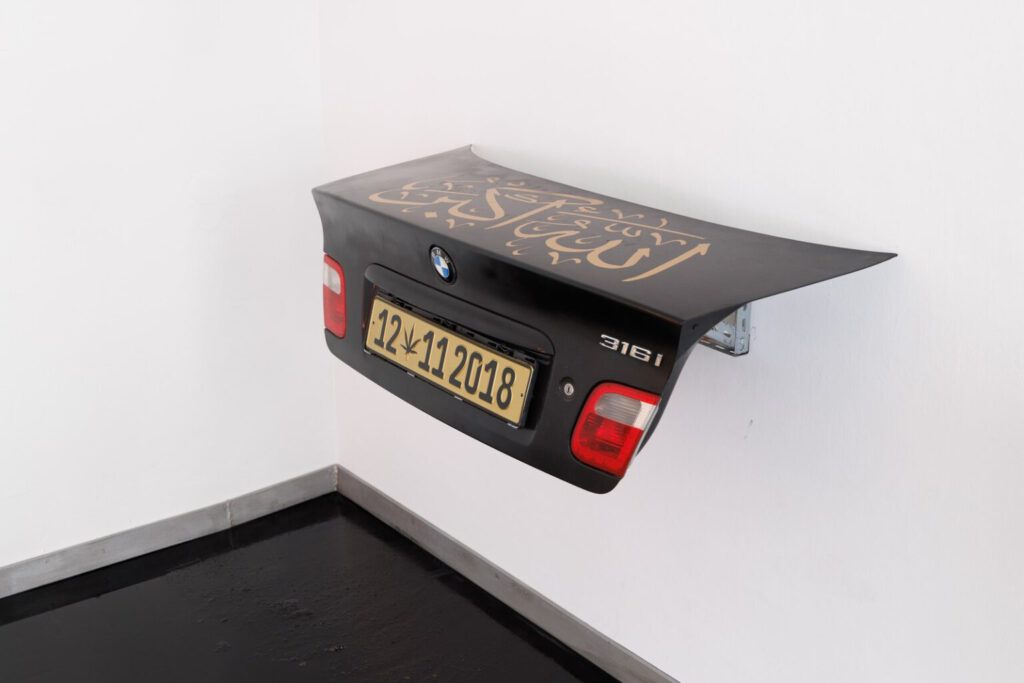
Visitors enter the first section of the exhibition via a metal bridge structure integrated into the space. The floor beneath this structure is flooded with jet-black crude oil, in which the sculptural objects attached to the wall are reflected. These artefacts are car parts – boot lids – on which the artist has placed sacred Islamic calligraphy and historical dates alongside the emblems of German car manufacturers. In doing so, she makes references to Napoleon’s invasion of Egypt in 1798 as well as to the German discourse on Turkish migration in the 1970s. The pungent smell of oil situates the entire installation within a system in which industrial strength, capitalist power and even personal identity are based on a raw material whose use is slowly poisoning us all.
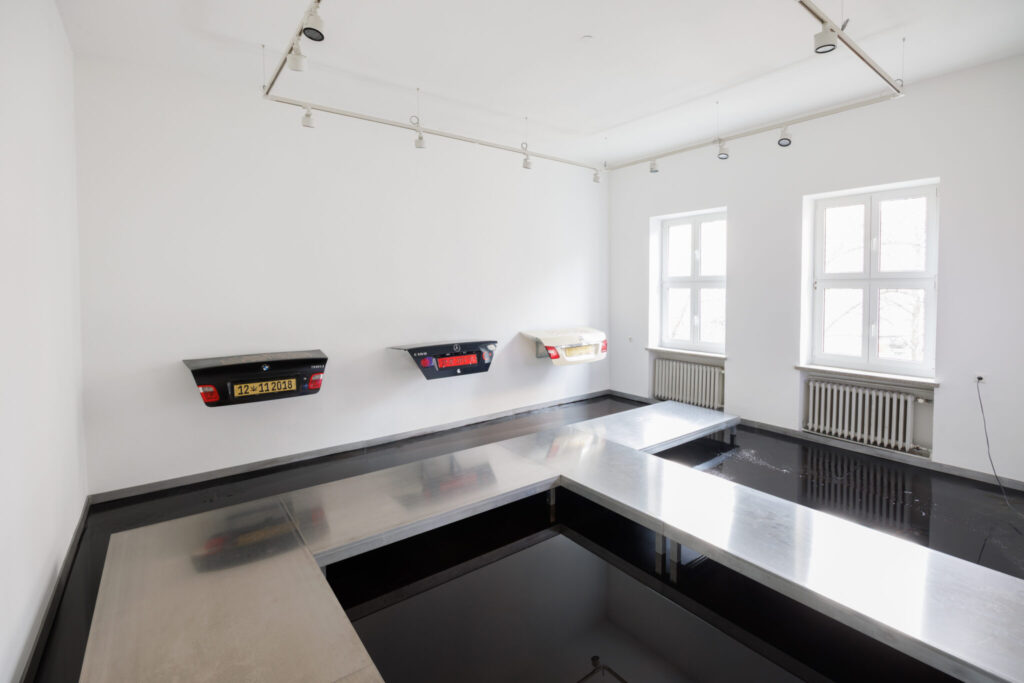
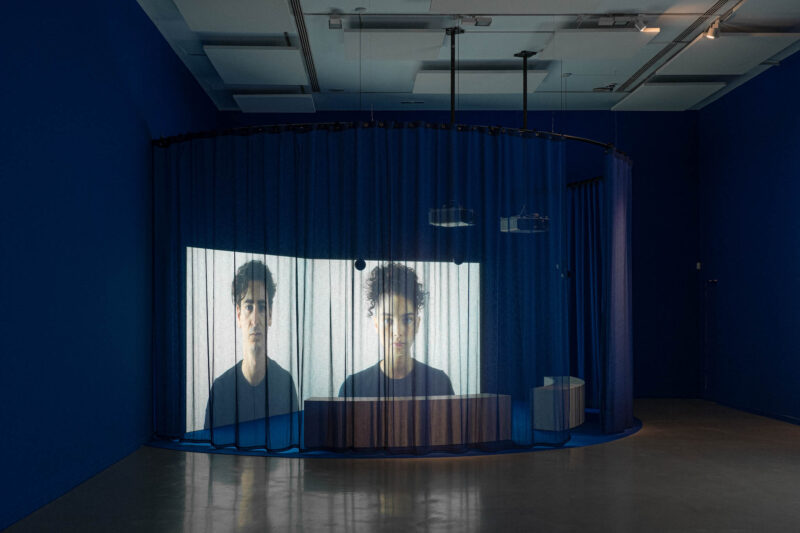
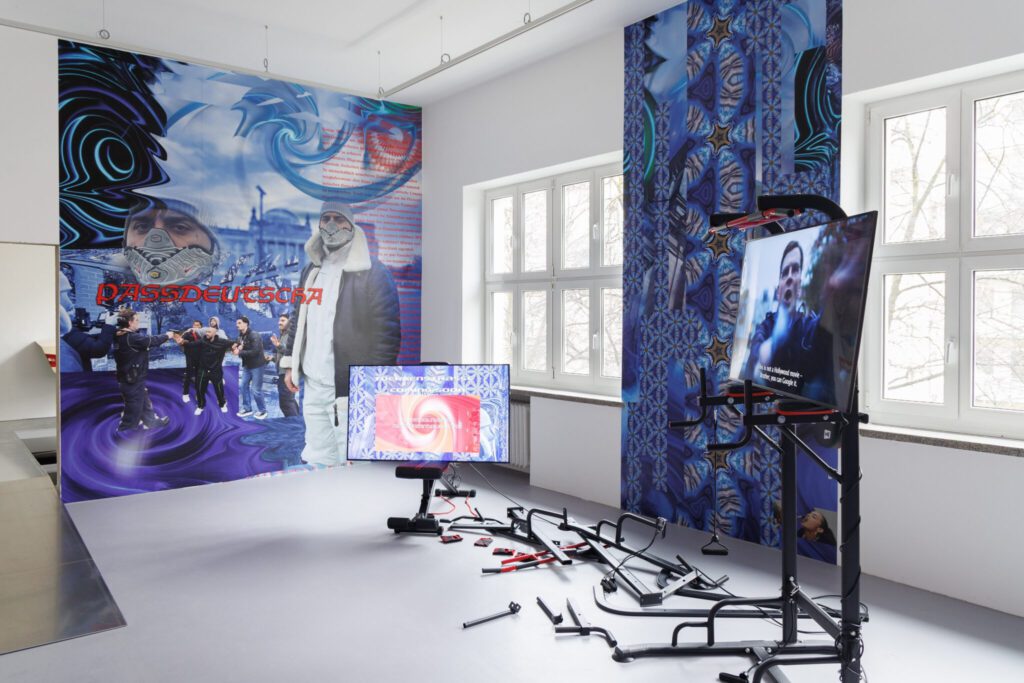
The works form part of the series “intimate histories”, which emerged following a collaboration with the Afro-German performance artist Rebecca Pokua Korang on the theme of clans in Berlin. Collaboration and exchange are central pillars of Anna Ehrenstein’s artistic practice. The exhibition also features “Passdeutscha”, Ehrenstein’s collaborative video with the artist and rapper Leonidas Emre Pakkan. Cleverly installed against the backdrop of a fitness machine, the video draws a parallel between perceived physical strength and the social vulnerability of marginalised groups. The video work “Türkenstraße”, which is also on display, is the result of a site-specific workshop in Munich, held in collaboration with the artist Gülbin Ünlü, who also currently has an exhibition at the gallery.
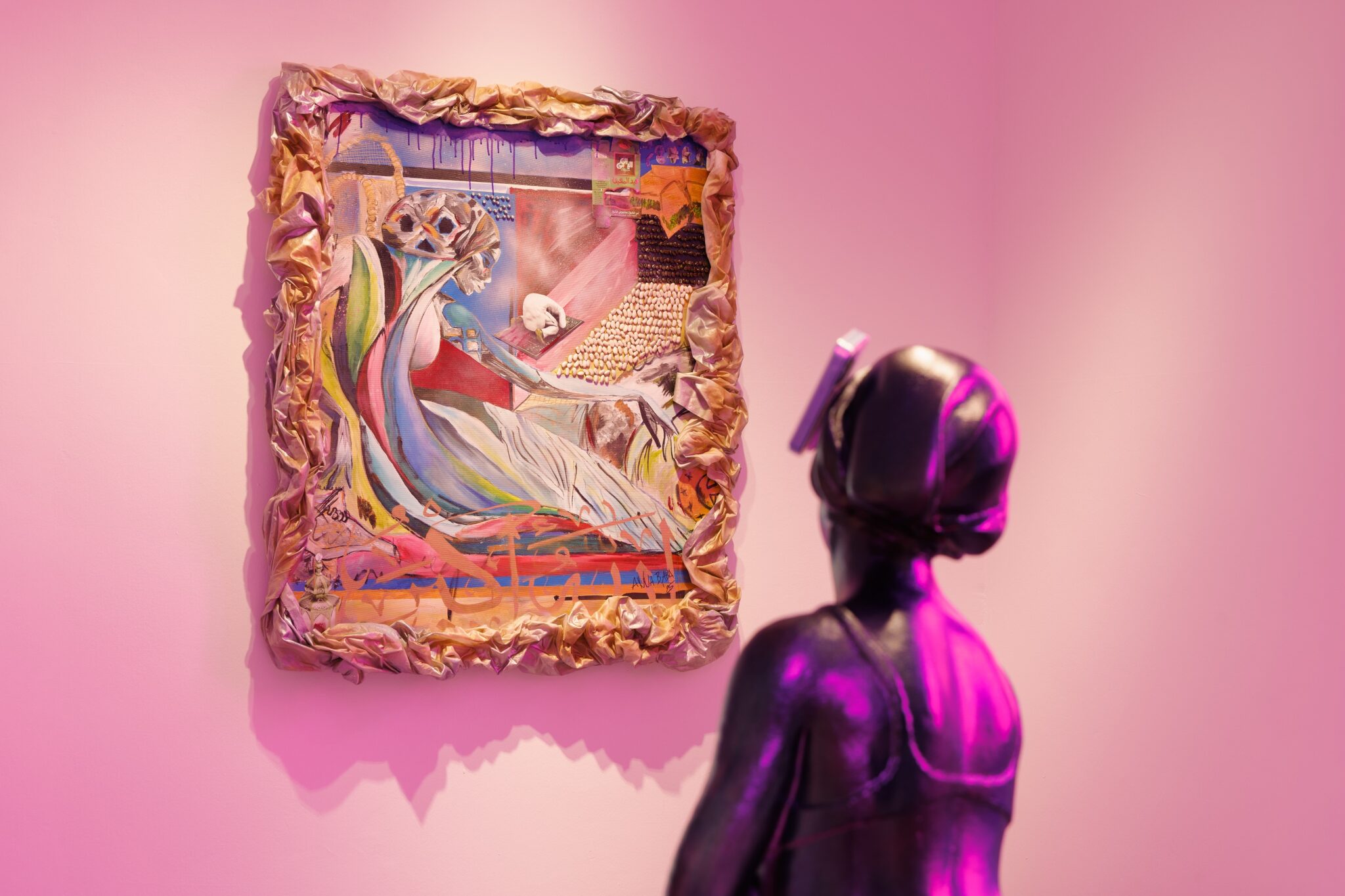
In her work, Ehrenstein – who originally worked as a photographer – explores forms of knowledge and how they are constructed. She uses and combines everyday objects to create alternative narratives that subvert the narratives of hegemonic systems. Her work is an ongoing exploration of the idea of identity in a postcolonial world. The final room of the exhibition is entered through a small, oriental-style door that the artist has incorporated into the architecture. The room itself is bathed in pink light that shines through the foil-covered windows. Here, Ehrenstein displays various series of image-bearing objects that, at times playful and at times abstract, touch upon personal and political themes. The sculpture “Melody for a Harem Girl by the Sea” is both an ode to the Muslim femme cyborg and can also be interpreted as autobiographical.
In her exhibition, Anna Ehrenstein interweaves personal and social aspects; her works are imbued with both cultural and political significance. Her exhibition, conceived as an installation, explores themes of collaboration and appropriation and subverts the notion of individual authorship. Her objects, videos and images are interconnected and deeply rooted in a post-digital world in which cultural boundaries are crossed and the dynamics of identity and narratives are deliberately examined, yet dependencies and unequal power relations persist. This is also evident at the location of Villa Stuck’s temporary premises, a neighbourhood under intense pressure to change and in which the museum itself is becoming a driving force behind gentrification.
VS, Interimsquartier der Villa Stuck, Goethestraße 54, 80336 München