In her artistic approach, Lap-See Lam does not view identity solely as a fixed point of origin; rather, it is a ramified network of diverse relationships that spans places, generations and materials, and is constantly being reconfigured. In her poetic exhibition “192 Wing Lok Street” at the Secession in Vienna, she brings this dynamic to life, whilst also revealing fractures and fissures. She creates a tapestry of architectural fragments, family memories and cultural translations, in which the question of origin takes on both a material and a narrative dimension.
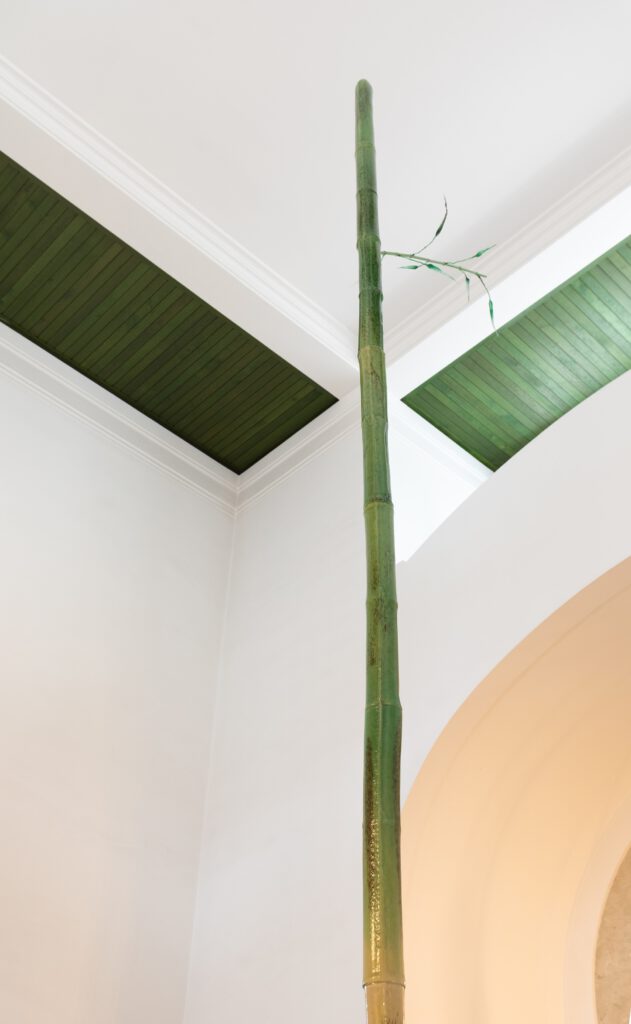
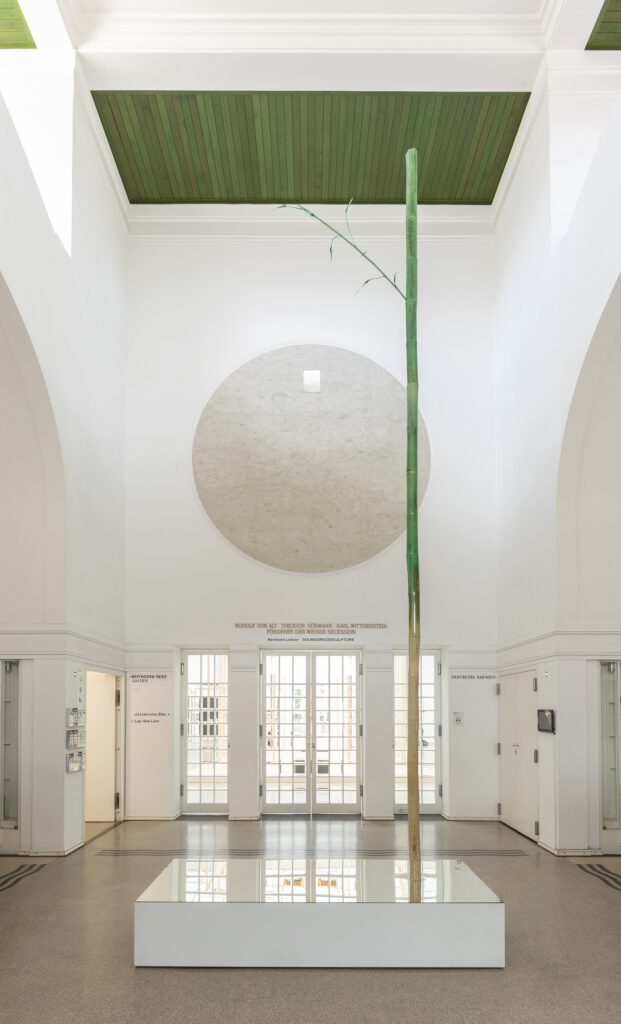
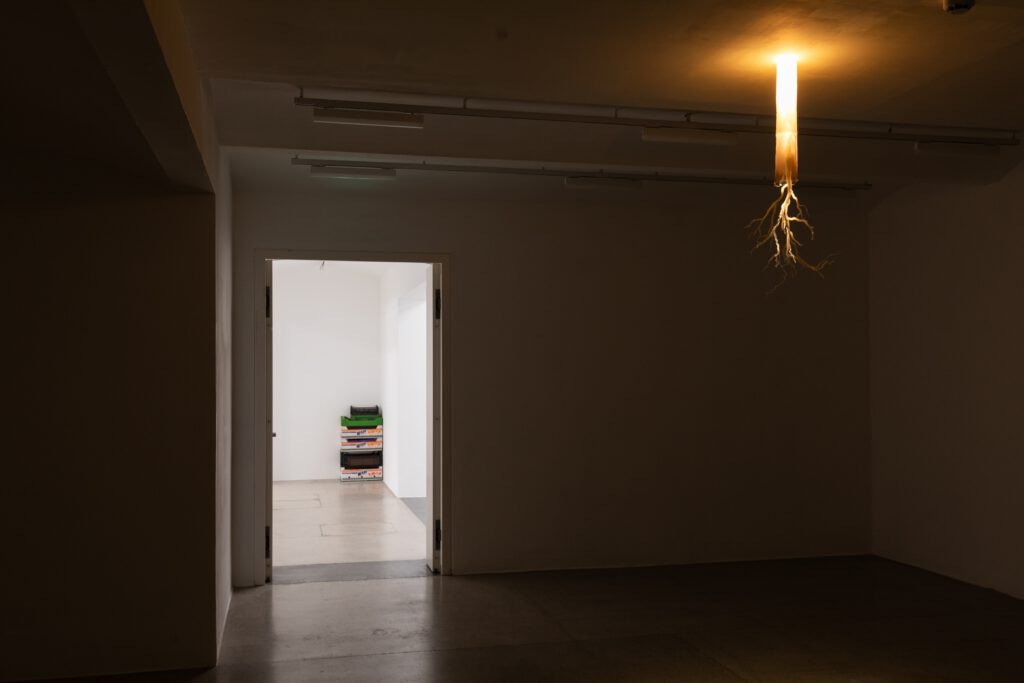
The entrance area of the Secession in Vienna is dominated by a glass bamboo stalk that is over five metres high. Positioned on a horizontal mirrored surface, it appears both massive and fragile at the same time. The stalk is at once a sculpture and a structure, an organic form and an artificial creation. Its slender body responds to the existing architecture, contrasting with it whilst also complementing it seamlessly. The entire building is, after all, crowned with a golden laurel dome. The stem appears to penetrate the floor of the hall, and indeed, one storey below, at the entrance to the actual exhibition, a remnant of the glass stem can be seen on the ceiling, from which delicate glass structures seem to grow. Skilfully illuminated, this structure appears like a hybrid of a crystal chandelier and a root system.
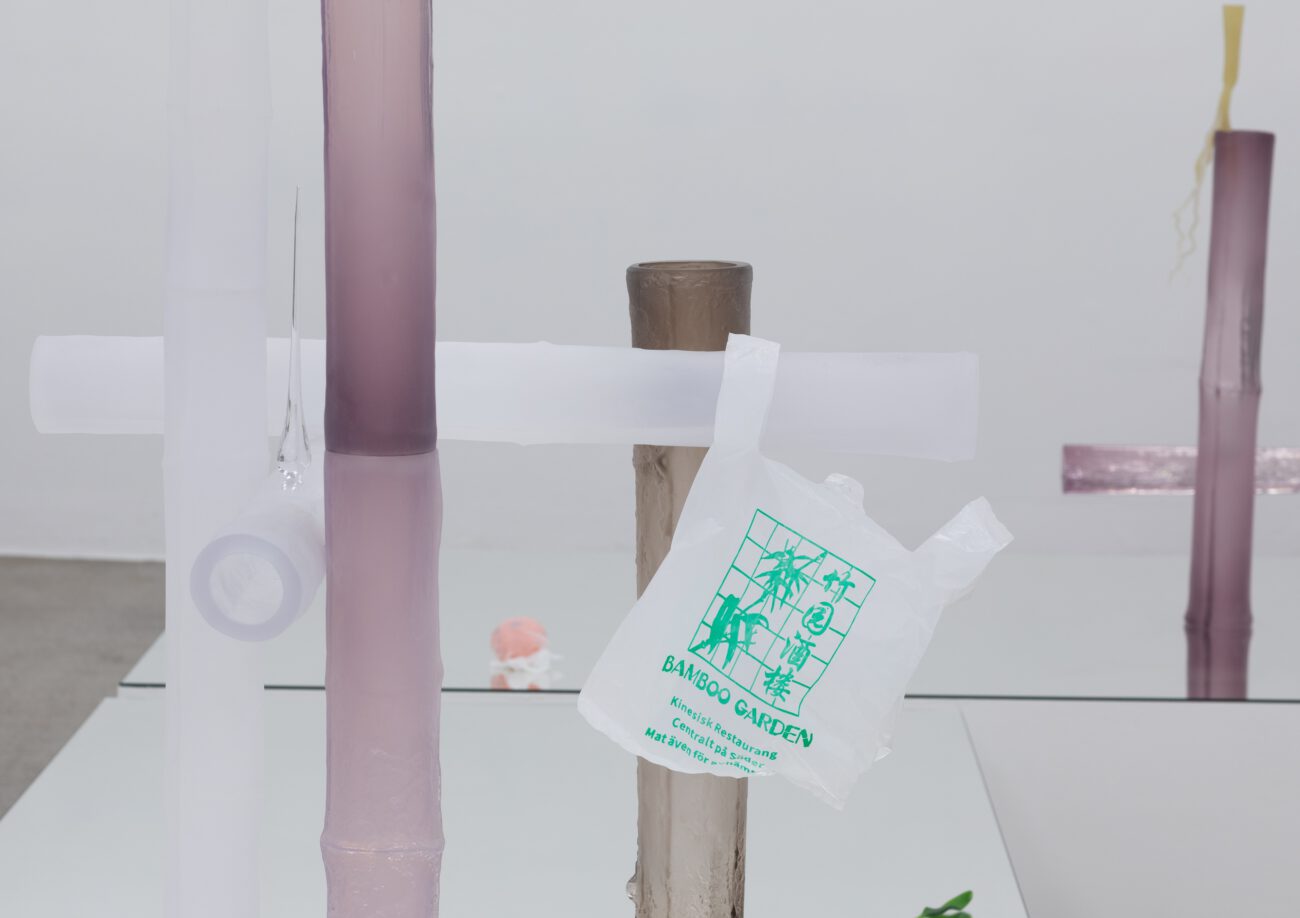
Lap-See Lam explores roots – both proverbial and literal – in her current exhibition “192 Wing Lok Street” in Vienna. As one walks through the exhibition space, a multitude of bamboo segments can be seen, also made of glass, arranged in a rhythmic sequence of vertical and horizontal lines, creating an interplay of geometry and chaos. The exhibition title refers to a street in Hong Kong where the artist documented bamboo scaffolding, which is still used in local construction today. At the same time, the address is linked to her family’s history: her grandmother once worked as a fruit vendor on this street. This dual reference brings together the different temporal layers that characterise Lam’s artistic practice. The street is both a specific place and part of a personal, familial biography in equal measure. Furthermore, it becomes the starting point for an individual exploration of the ways in which cultural memory is transmitted.
Born in Stockholm in 1990, the artist’s work explores the experiences of the Chinese diaspora and the shifts triggered by migration within familial and cultural contexts. Her works combine traditional forms of storytelling with digital technologies, speculative fiction and mythological motifs. The resulting images and objects allude to the inherent unreliability of cultural transmission. In the flux of time, memories change, meanings shift and connections are lost. At the Secession, she translates these questions into a new body of work comprising hand-blown glass pieces, installations and sound.
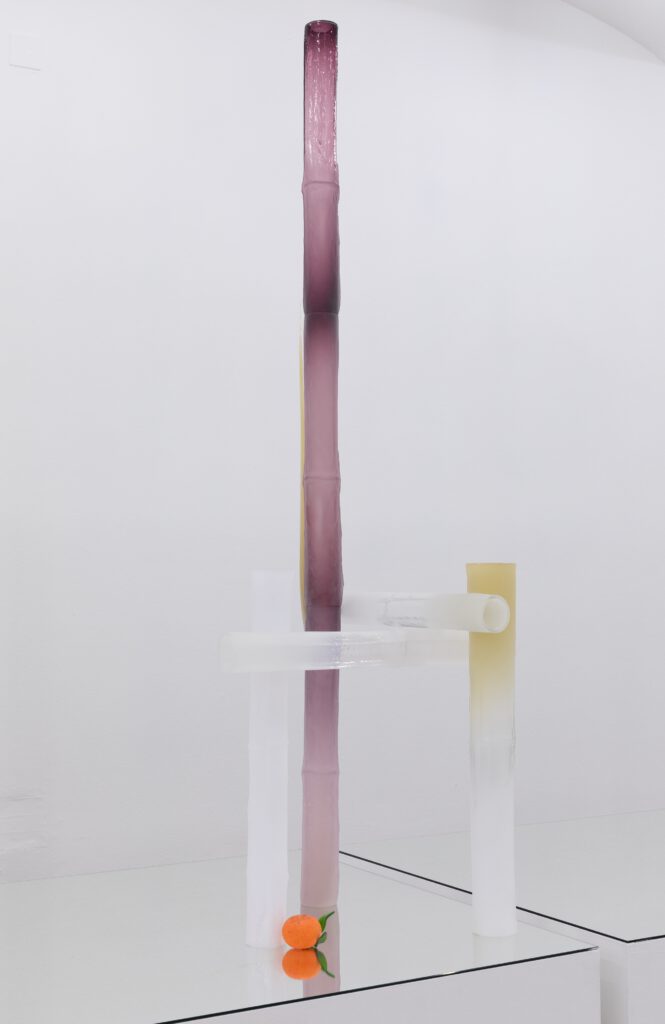
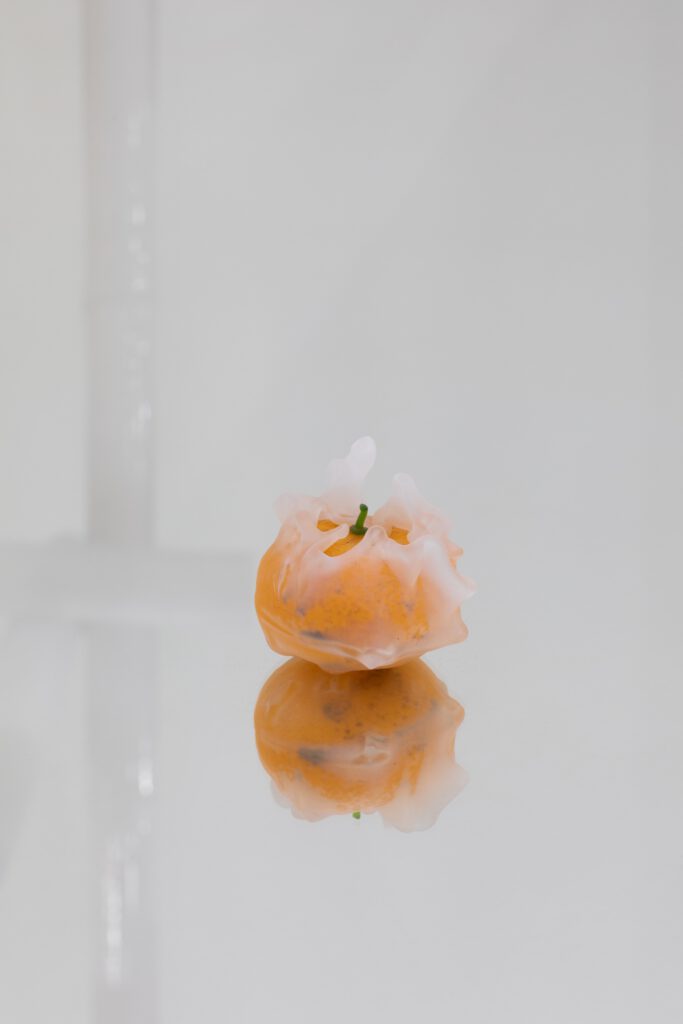
The physical transition from bamboo to glass marks a break. The building material, which is by nature flexible and functional, is transformed into a delicate, almost unreal object that no longer serves any practical purpose. The individual modules do not form a closed arrangement. Their rhythmic arrangement creates an interplay of repetition and interruption, of geometric clarity and structural turbulence. Placed upon polished, mirrored surfaces, the boundary between sculpture and spatial installation becomes blurred. Objects such as plastic bags and mandarins are positioned amongst the abstract sculptures. They evoke commodities, transport, the general flow of the economy and the specific role of the grandmother as a fruit seller. The mandarin in particular can be interpreted on various levels. In Chinese culture, it is a powerful symbol of luck, wealth and prosperity; however, the etymology of the term is in itself complex. The word ‘mandarin’ is derived from the imperial Chinese civil servants, the so-called mandarins. The precise linguistic journey of the term, however, leads from Portuguese via Malay to South-East Asia, making the mandarin a truly global fruit. Furthermore, an auditory intervention permeates the spaces. The sound, composed by Marlena Salonen and Linus Hillborg, emanates from a repurposed air-conditioning unit, a device frequently found in this form on the exterior of building façades.
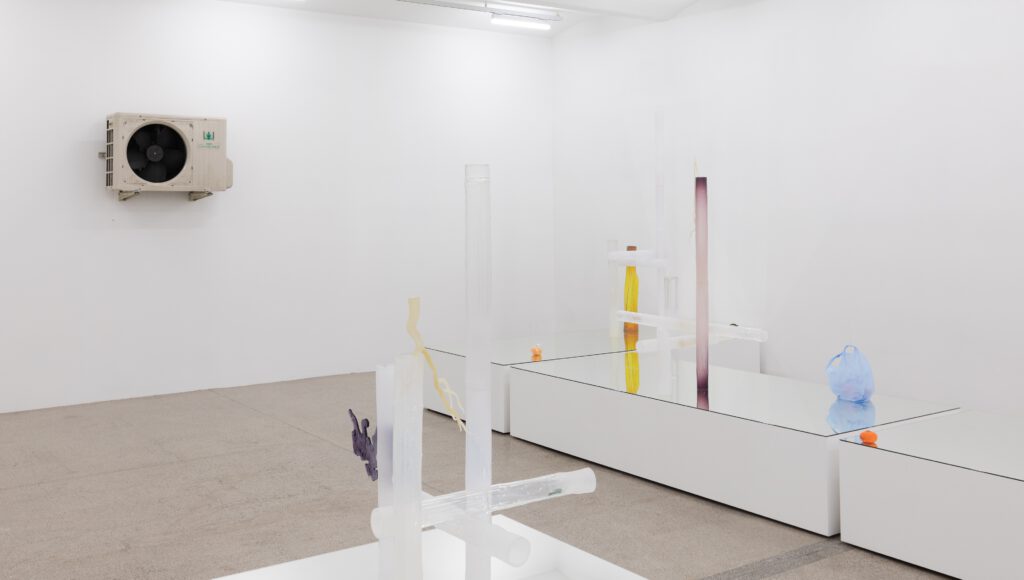
Taken as a whole, 192 Wing Lok Street establishes a precise relationship between personal memory and spatial experience. The architecture of the Secession itself becomes an integral part of the work. The bamboo in the foyer connects the upper and lower levels through a vertical intervention. This dynamic lends the exhibition a spatial dramaturgy that intertwines with questions of origin and tradition. Lam’s works derive their strength from the restraint with which they unfold their meaning. The biographical references are discernible, yet remain open enough to point beyond individual family history. The ideas of migration and home appear neither as abstract buzzwords nor as narratives of an unambiguously definable identity. They are negotiable processes that draw on memories, materials and shifting meanings. A letter that is part of the exhibition contains this beautiful sentiment: Safeguarding memories from past generations is a tenacious, precarious endeavour.
Wiener Secession, Friedrichstraße 12, 1010 Wien, Austria