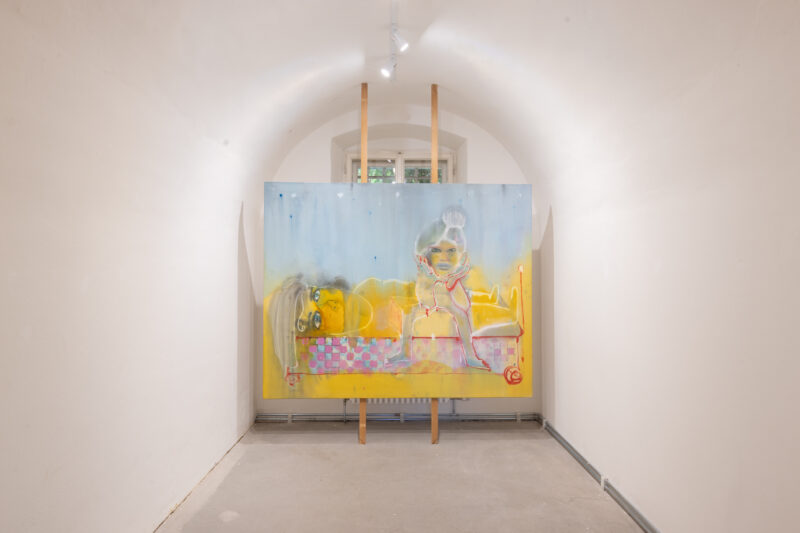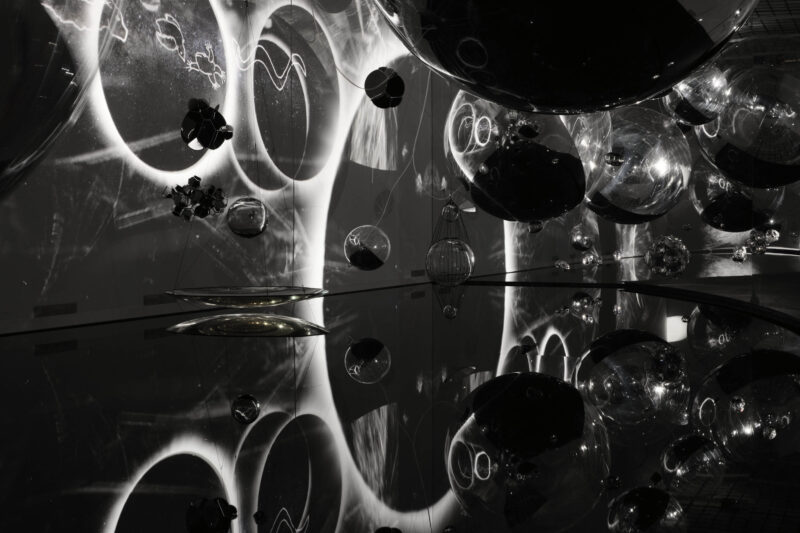
For the Hungarian Pavilion at the 60th Venice Biennale, Márton Nemes has created a transmedia project that explores the genre of painting. In doing so, he combines light, colour and sound to create an immersive environment. The exhibition at the Ludwig Múzeum showcases the project presented in Venice, supplemented by a selection of works the artist has created over the past decade.
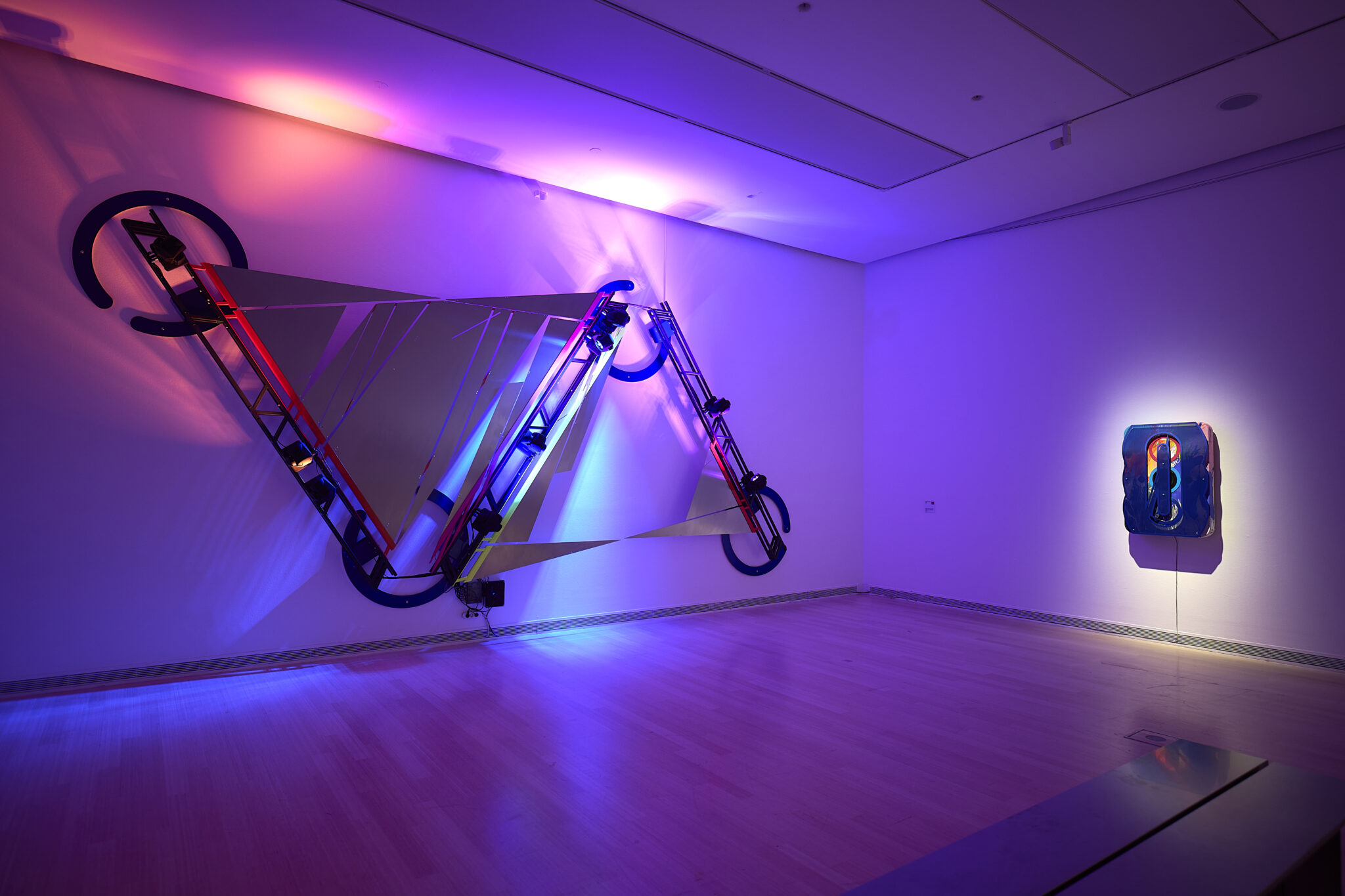
The colours and surfaces of the works on display at the Ludwig Múzeum shimmer almost unrealistically; they are staged under special lighting, and some even set themselves in motion or have their own soundtrack. Under the title “Techno Zen”, a wide selection of works by Márton Nemes is on display; some were presented this year in the Hungarian Pavilion at the 60th Venice Biennale, whilst others are older pieces. In his practice, the artist combines different materials and techniques; he blends laser-cut metals with car paint, enamels steel and uses projections, animated lights and loudspeakers, as well as coloured fans that create a draught in the exhibition space.
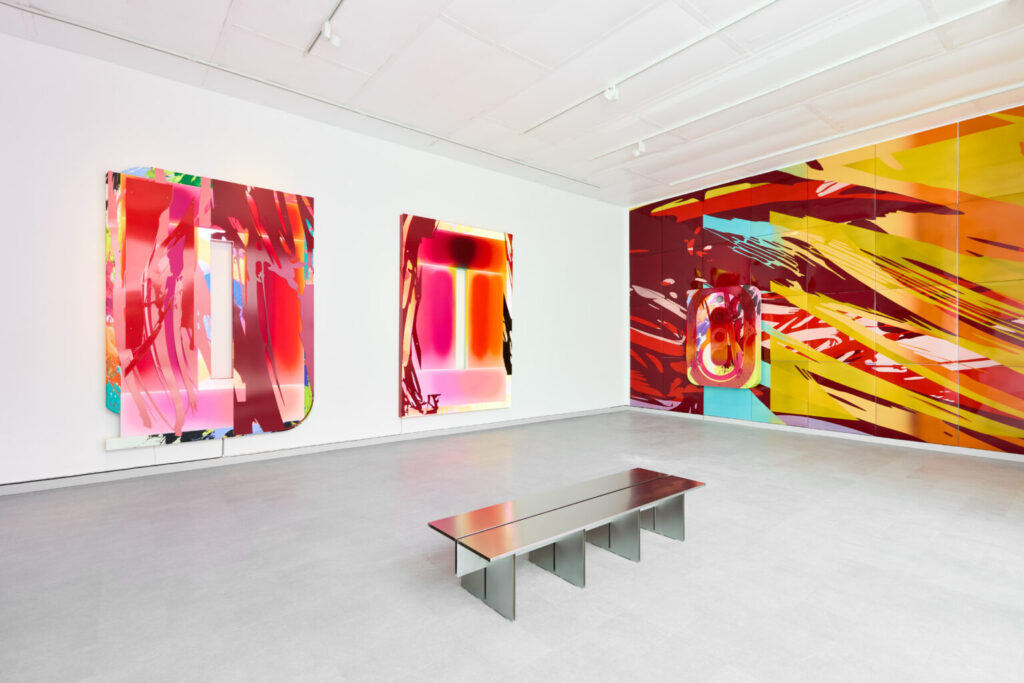
The result is a visual, acoustic and multimedia tapestry of vibrant colours and organic forms. The two polar concepts of ‘techno’ and ‘Zen’ merge to form the hybrid that gives the exhibition its title. ‘Technozen’ also describes a specific aesthetic inspired by Japanese technologies of the mid-to-late 2000s. It can be described as cold, sterile and professional, yet at the same time as pleasant, friendly and playful. This tension is also evident in Nemes’s works. He combines elements of painting with strategies from sculpture, thereby creating multimedia installations that truly unfold a spatial dynamism and create their own colour space. Large-format image carriers are positioned within the space, whilst image panels on the walls respond to the existing architecture.
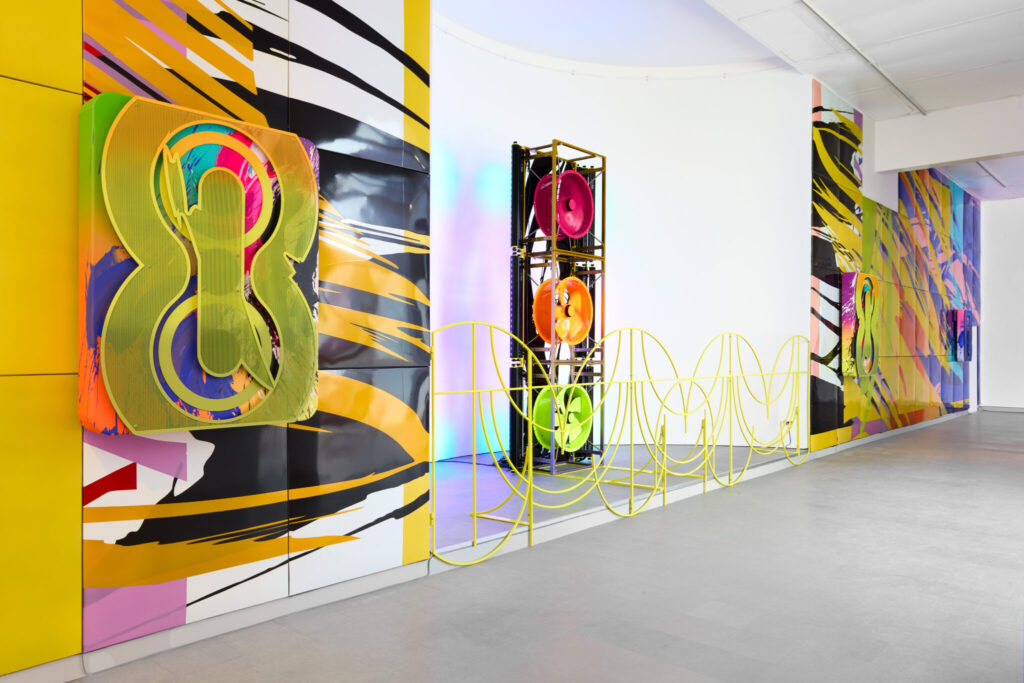
In doing so, Nemes also works at the interface between the digital and the real world. He combines industrial technologies and materials with more traditional approaches, thereby creating works that seem almost unreal in their perfection. The colours and colour gradients look as though they have been taken straight from a graphics programme. In his works, the artist stacks layers on top of one another, much like Photoshop layers, seemingly cutting out shapes here to insert them elsewhere. The works appear almost flawless and, in their superficial perfection, are downright surreal.
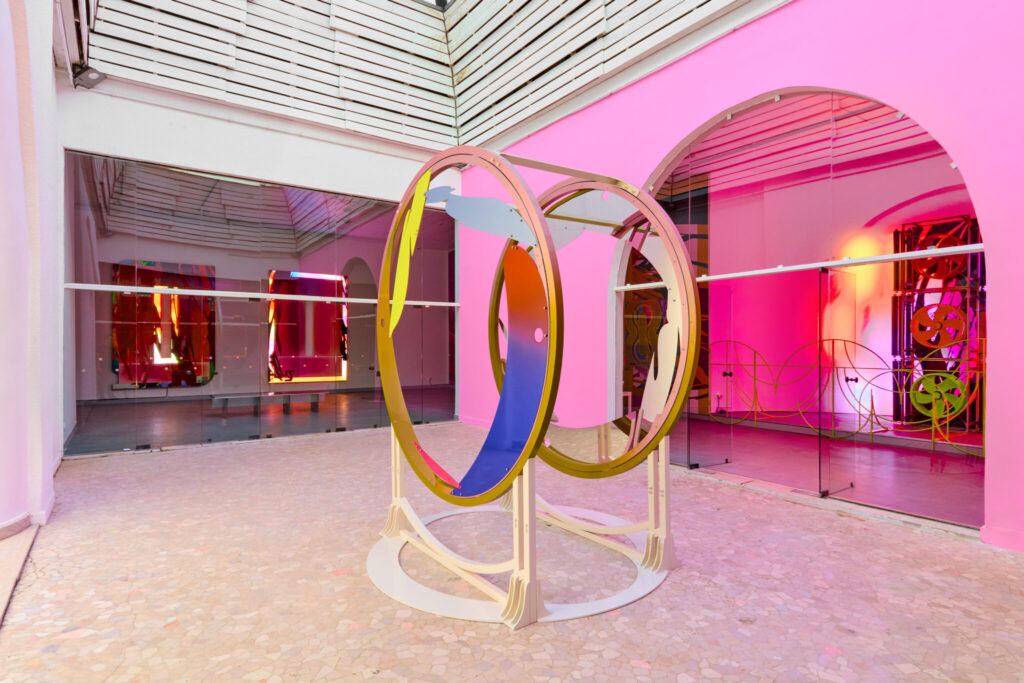
The exhibition “Techno Zen” offers an impressive overview of the work of Márton Nemes. His works are colourful, engaging and multi-sensory. Their visual, auditory and tactile elements unfold through the combined effect of light, colour, movement and sound. Yet they remain strangely intangible; they transcend both the digital and the real worlds and seem, in fact, to float in the moment. The catalogue published by the Ludwig Múzeum to mark the occasion contains essays by art historians and curators Loránd Hegyi, David Rosenberg and Anika Meier.