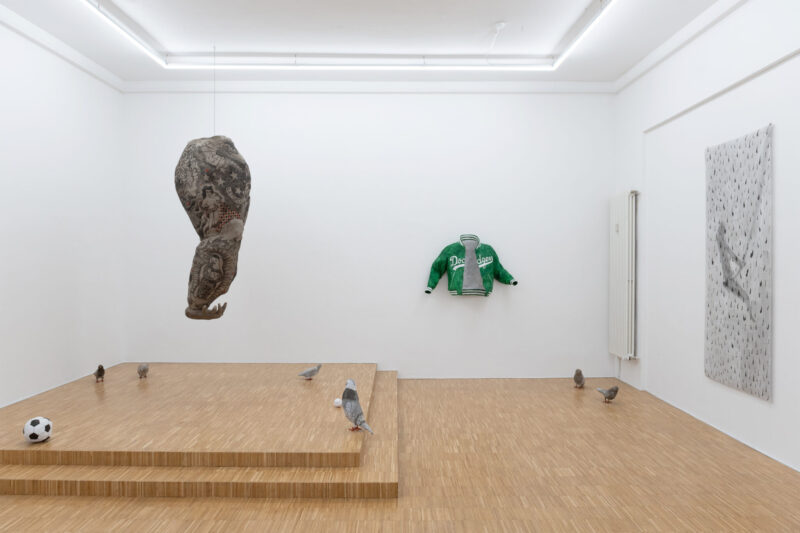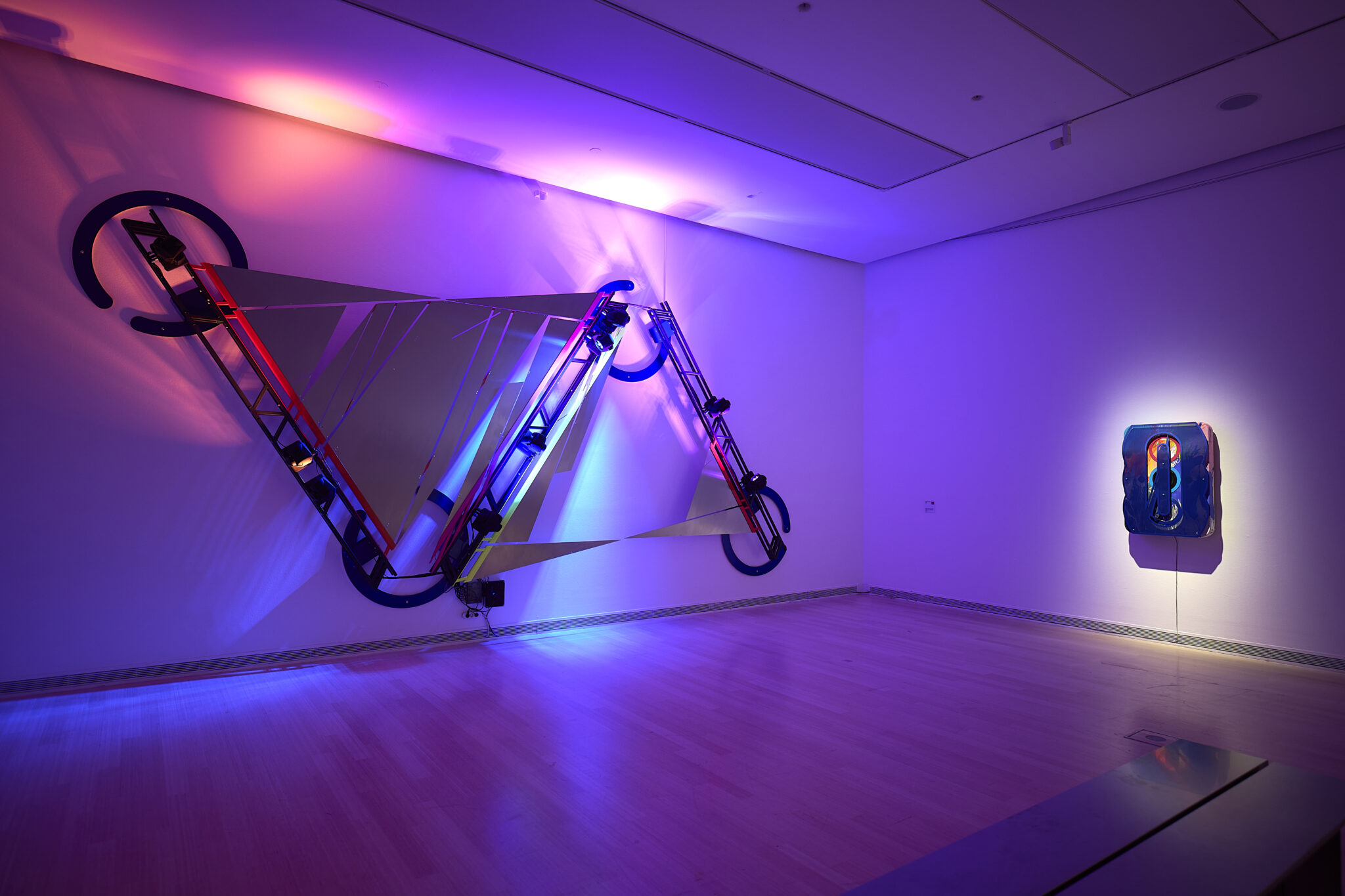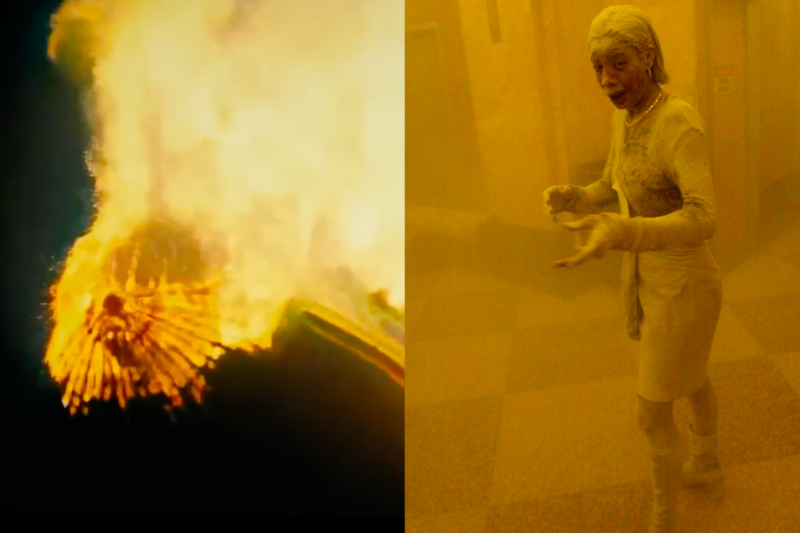
At a time of multiple global crises, when the question “How do we want to live?” has long since become a matter of survival, the 16th Kleinplastik Triennial in Fellbach ventures a sculptural exploration of the concept of “habitat”. Over 60 international artists are transforming the Alte Kelter into a space that can be experienced through the senses, telling the story of the fragile balance between humanity, nature and technology.
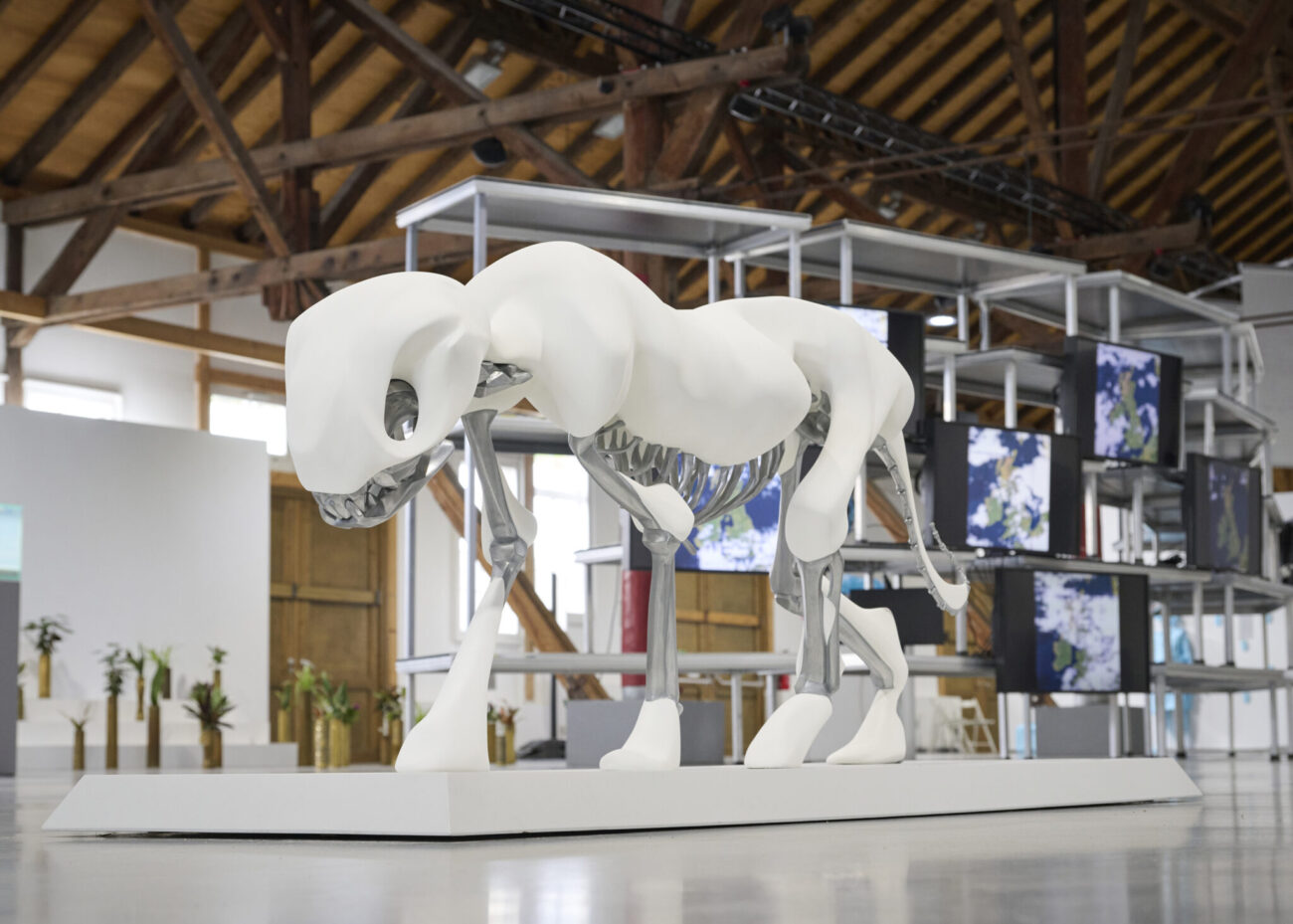
The impressive, light-filled hall of the Alte Kelter in Fellbach resembles a landscape dotted with art. The exhibition design for the 16th Fellbach Small Sculpture Triennial blends elegantly into the structure of the building, which is filled with sculptures, installations and screens. It is fitting, then, that the exhibition leaflet is not presented as a guide, but as a walking map leading visitors along various routes through the space, where one can also spot a futuristic big cat by Flaka Haliti. The animal is composed of the skeletal forms of various species, a speculative hybrid for the post-natural age.
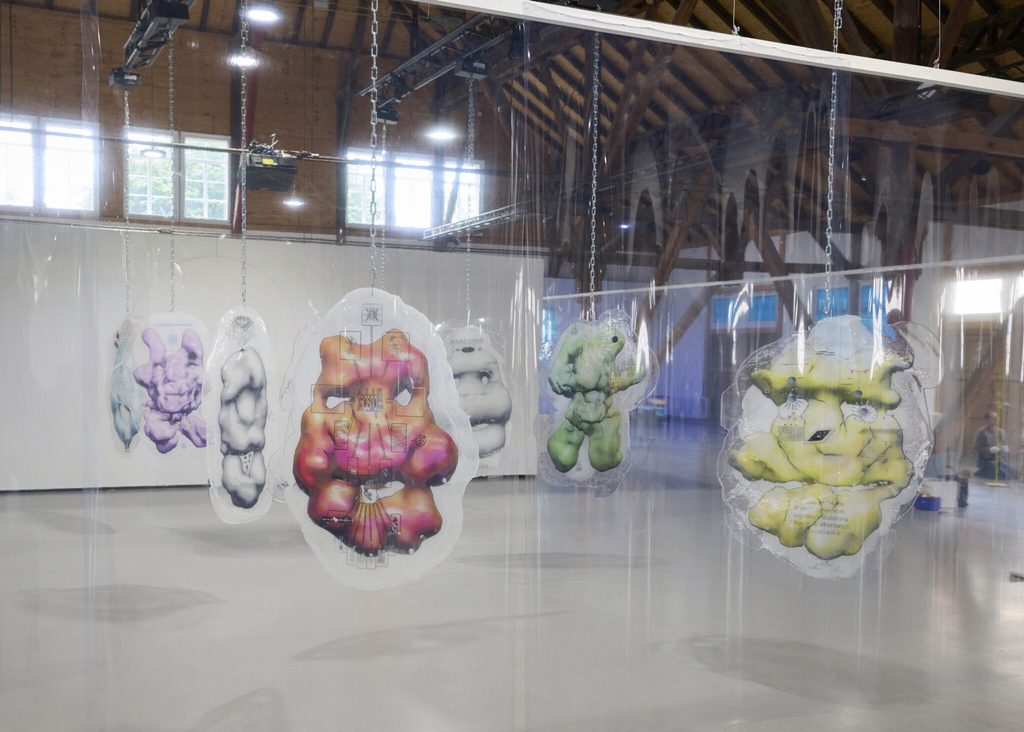
The exhibition’s title, “Habitate. Über_Lebensräume”, is deliberately ambiguous: it refers not only to ecological niches or architectural enclaves, but also opens up a discursive field in which artistic utopias and social dystopias overlap. The Triennial presents itself not as a museum-style inventory, but rather as an open field of thought and experience. Here, ‘habitat’ is understood as a biological concept as well as a distinctly social, political and technological one.
Climate change, species extinction, migration and wars have a direct impact on our physical and psychological environments, alter the fundamental conditions of our lives and can cause stress. The exhibition organises the works on display into six thematic areas; in the ‘toxic habitats’ section, we can see Monira Al Qadiri’s oil-covered birds, a stark testament to the oil age and the natural disaster that followed the Second Gulf War. Equally ecologically questionable are the stony German front gardens to which Emma Adler refers. Her work in the ‘lost habitats’ section is a concrete version of such a suburban non-place, thought through to its logical conclusion. Under the pale neon light, the installation resembles a walk-in digital rendering from the 2000s: grey, cold, dead and soulless.
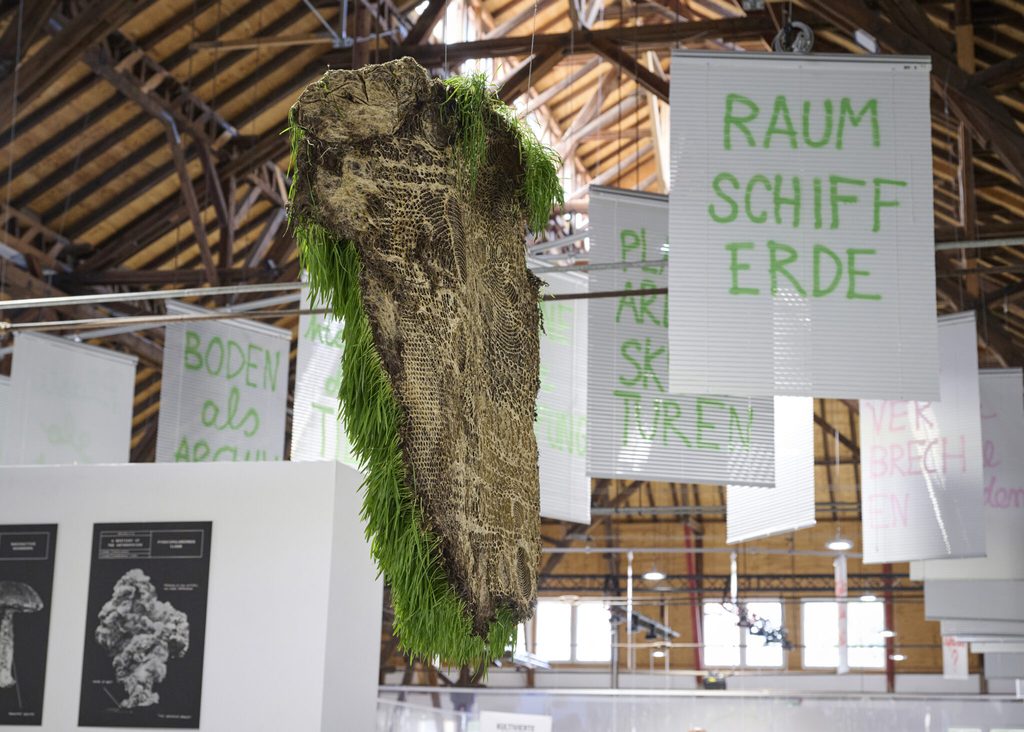
The range of works on display extends from traditional small-scale sculptures and videos to hybrid systems made from organic and synthetic materials. Visitors are greeted by the ‘Bestiarium des Anthropozäns’ by disnovation.org. This collection of objects and wall installations is intended to serve as an encyclopaedia and nature guide to the hybrid habitats of the 21st century, illustrating the post-natural era in which we live. What do robot vacuum cleaners, plastic flowers and Tamagotchis reveal about our interconnected society? Directly above this, a completely analogue network is installed in the form of “Intervowen #7”. Diana Scherer presents an organic root system, commonly regarded as the brain of plants. As a living sculpture, this work reveals the complexity and fragility of natural systems.
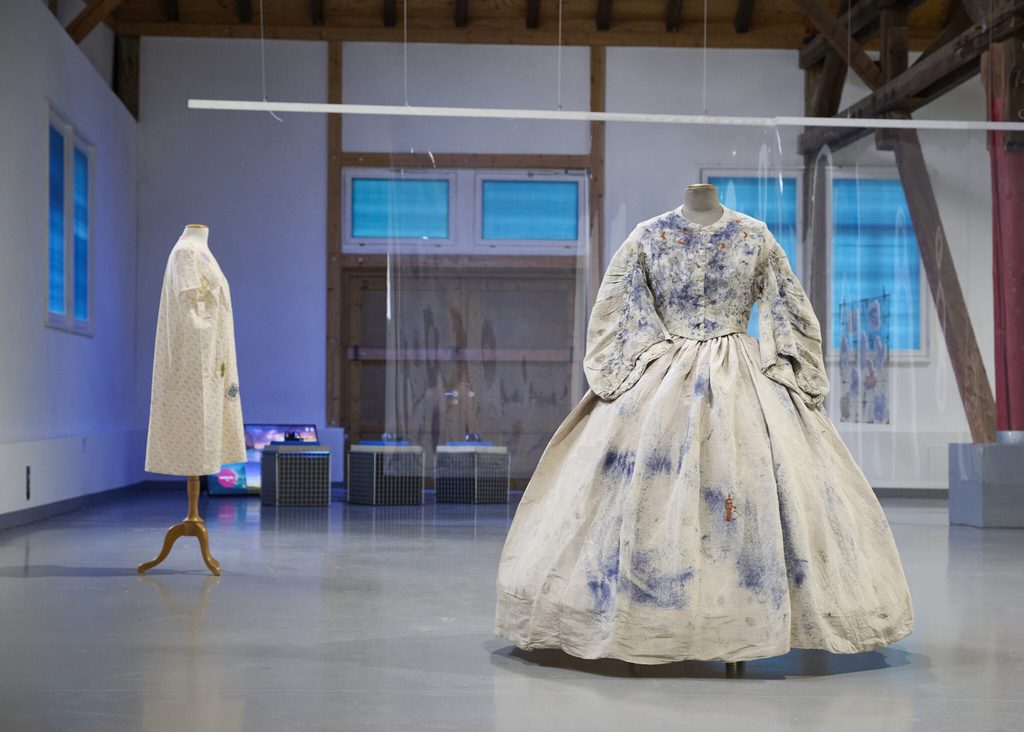
The exhibition as a whole is a multifaceted and ambitious panorama of artistic perspectives. The fact that the exhibition itself is conceived as an aesthetic landscape and a garden of ideas reinforces the impression of a permeable space: visitors are not merely expected to observe; they can navigate the complex thematic areas themselves, linger and engage in discussion. The curatorial approach views the habitat not as a static place, but as a dynamic space for experience. The Alte Kelter thus becomes a habitat in the truest sense of the word. Open, pluralistic and flexible, it offers a space in which new forms of coexistence between humans, technology, animals and plants can be explored.
Alte Kelter Fellbach, Untertürkheimer Straße 33, 70734 Fellbach.