Under the title “The Strange Life of Things”, the Pinault Collection is presenting Tatiana Trouvé’s largest solo exhibition to date at the Palazzo Grassi in Venice. The Franco-Italian artist presents a complex interweaving of objects, installations and drawings across three floors. The exhibition is a multi-layered system of subjective memories and projections that raises questions about space, time and the materiality of things.
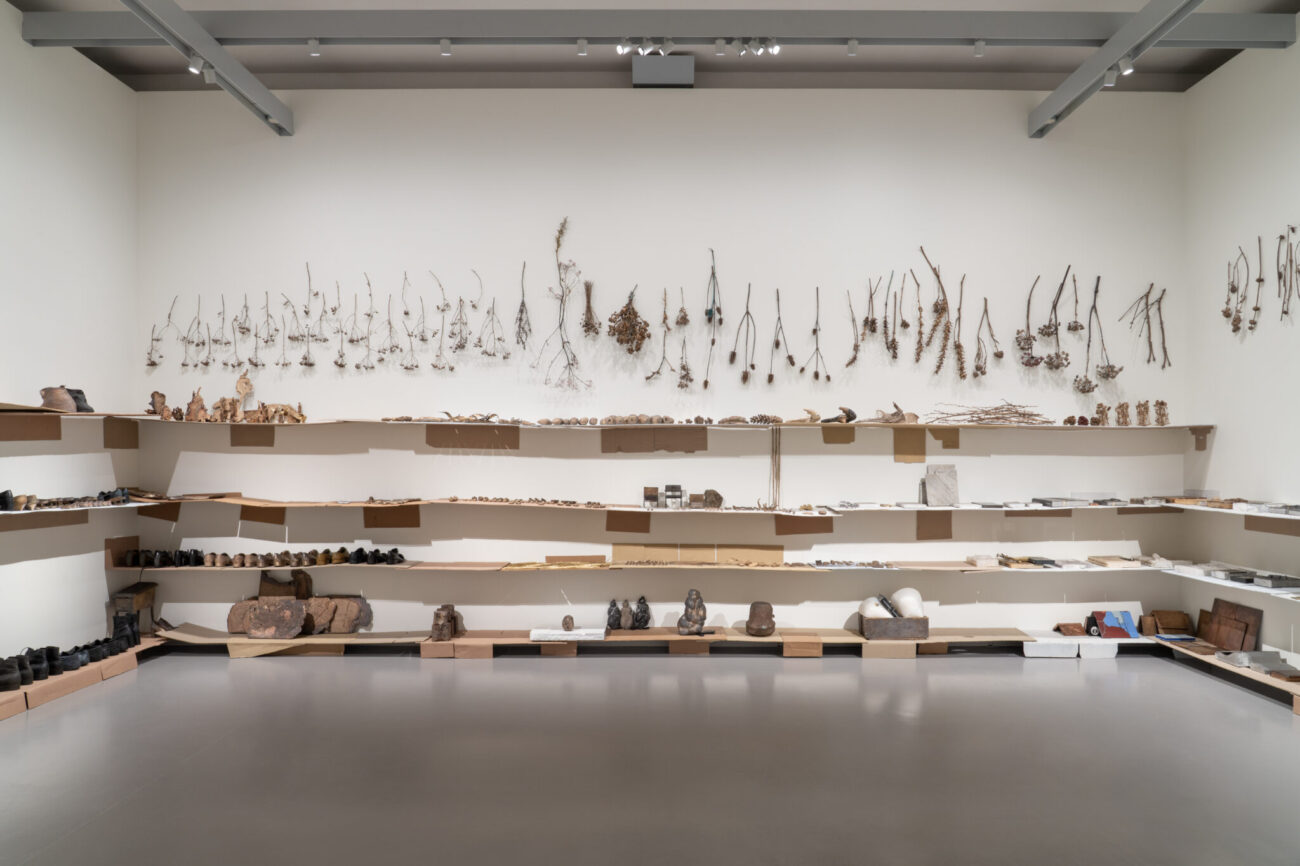
Flowering shrubs, seeds, shells, shoes, bags, books, boxes, metal tins, keys, radios and tape recorders – all collected, arranged in a peculiar order and presented in a g display in a room at the Palazzo Grassi in Venice. However, the Franco-Italian artist Tatiana Trouvé is not exhibiting ordinary objects here. The shells and flowers are metallic casts made of aluminium and bronze; the books are finely crafted blocks of marble; and the supposed cardboard panels on which this highly subjective and obsessive collection is displayed have been cast in aluminium to give the exhibits a little more stability. Even the empty tins have been given a new lease of life in a different metal.
The installation “L’inventario” is based on a storeroom in the basement of Trouvé’s studio in Montreuil, where many of the objects used in her works are archived and could be brought back into use at any time. A studio is essentially a private space where objects and tools are stored, techniques and materials are tested, models are built, and drawings and sculptures are created. However, this glimpse into the studio on display offers an intimate insight into the artist’s creative universe, her chamber of memories, her repertoire and her methods, which repeatedly flash and shine through throughout the exhibition.
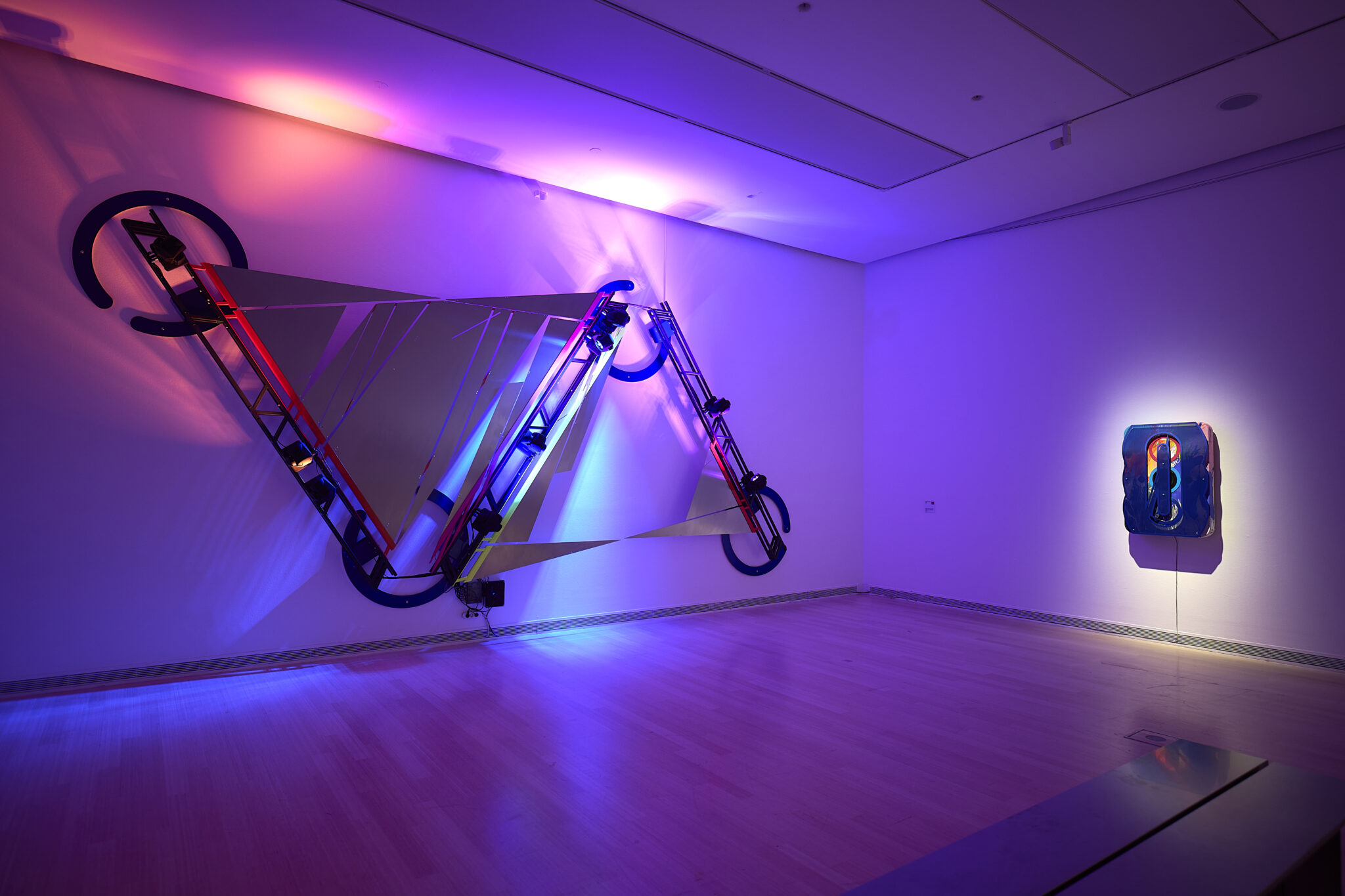
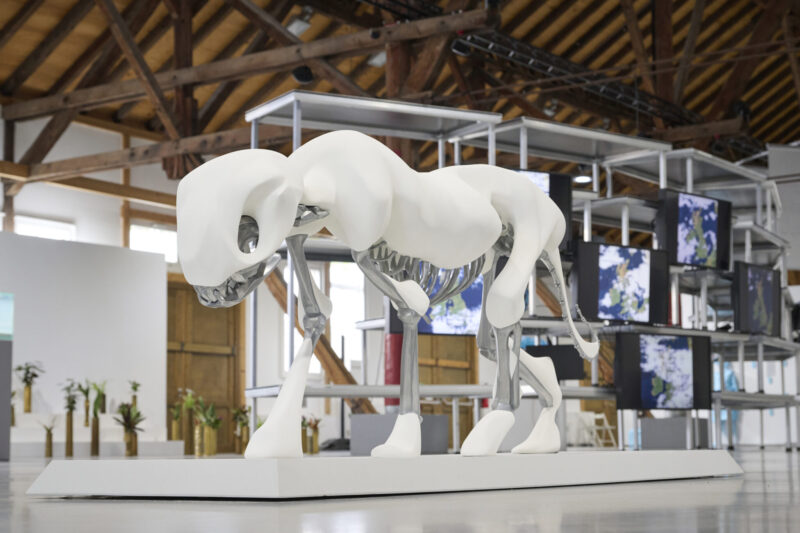
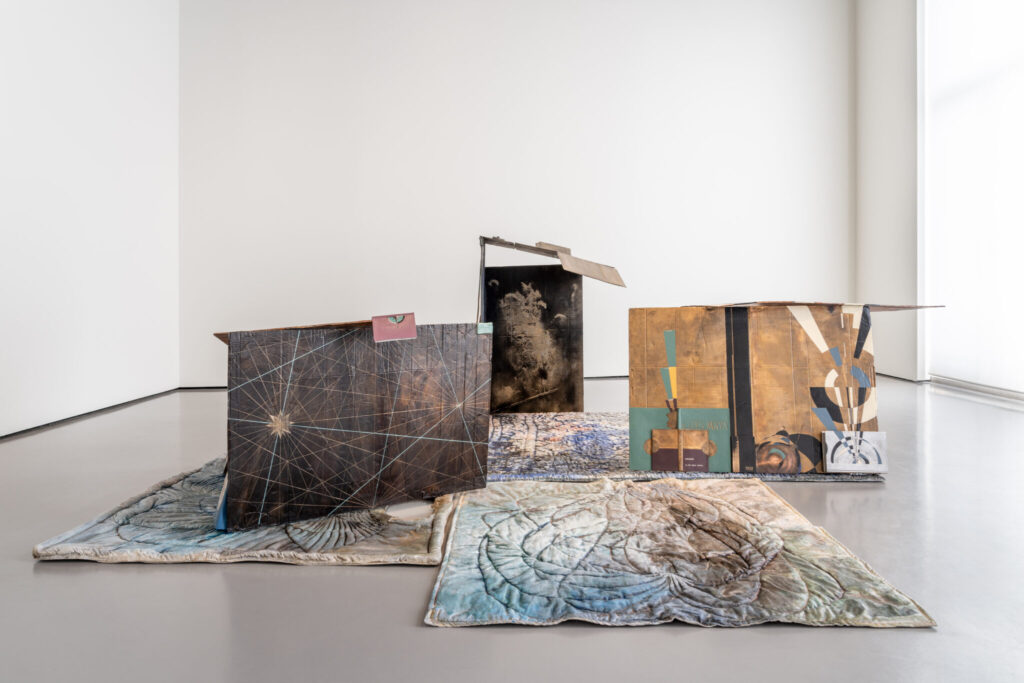
With “The Strange Life of Things”, she transforms the Palazzo Grassi into a dynamic, three-storey structure. The exhibition space is filled with an impressive selection of drawings, installations and sculptures that seem to play with the coordinates of space and time, both in terms of material and content. Rooms interact with one another, objects appear and disappear again, and dimensions shift. Trouvé herself describes her work as an “open ecosystem”. This system is permeated by recurring objects and motifs: suitcases, blankets, books, chairs. Pieces of wood and flowers. They form an inventory of transition and a collection of artefacts, at once familiar and alien, sometimes cast, sometimes drawn, sometimes alienated and distorted. Like fragments of memory, they emerge in different contexts and are interdependent.
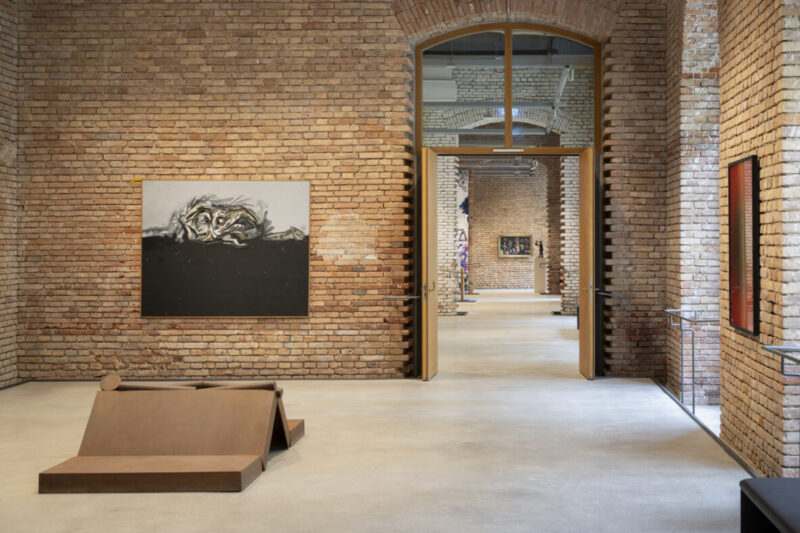
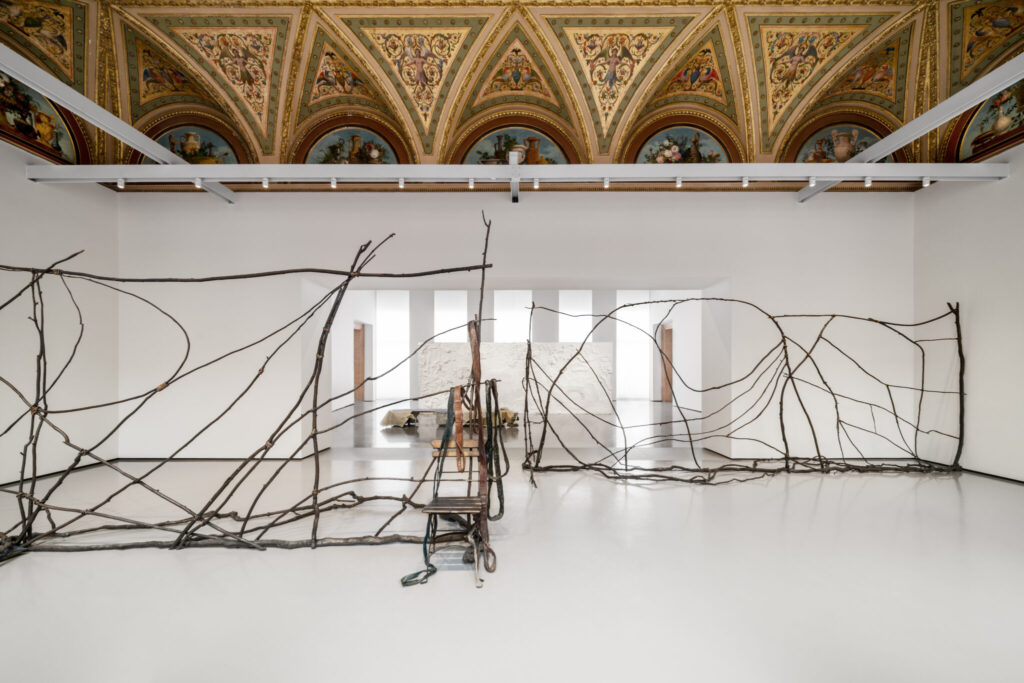
In her sculptural strategies, Trouvé skilfully utilises the interplay between different materials. She casts organic elements in metal, thereby playing with the concepts of transience and preservation. She also uses casting to preserve the tactile quality of soft fabrics and the texture of fragile paper over time. In doing so, she alters scales and dimensions. Through architectural interventions, she creates spaces within the Palazzo Grassi that both blend into and disrupt the original structure. Cleverly placed glass walls and screens extend this interplay with space: the boundaries between inside and outside become blurred; some rooms cannot be entered, but can only be viewed through small glass doors integrated into the architecture. Other spaces are deliberately open-plan, giving the large-scale sculptures ample room to unfold their subtle and poetic effect.
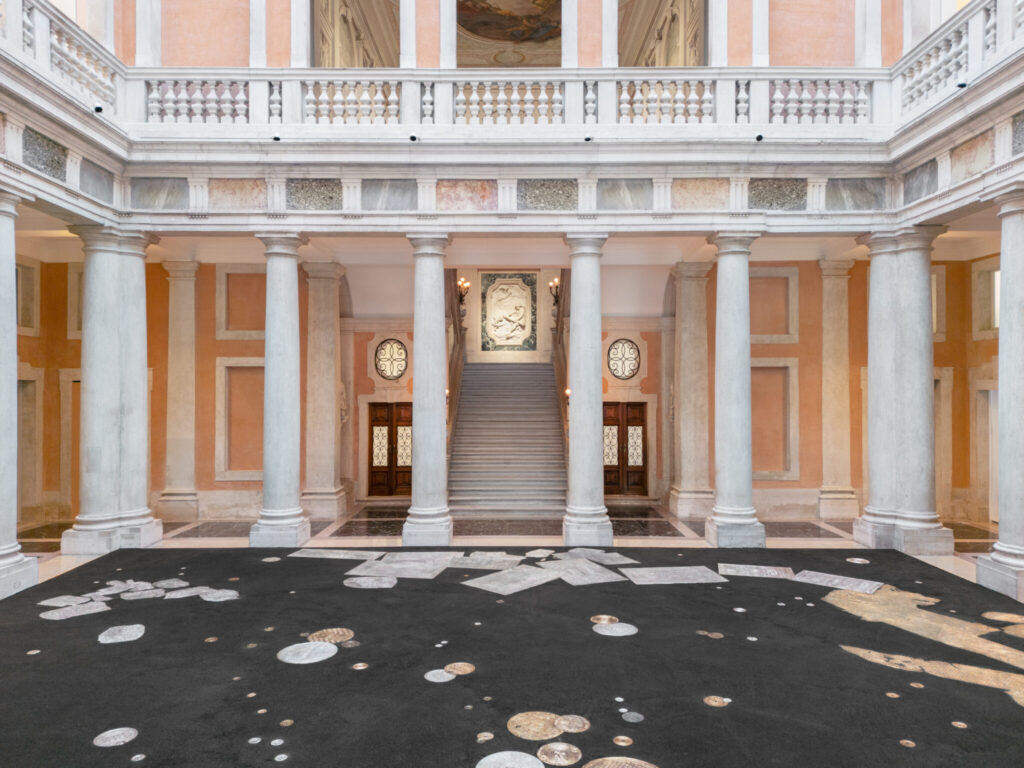
Such an intervention can also be seen in the atrium: asphalt covers the palazzo’s ornate marble floor – a material that is familiar as an everyday surface in urban infrastructure, yet at the same time harks back to the geological past. Embedded in the black surface are casts made from various metals of manhole covers and metal plates for utility pipes, which Trouvé has found in cities all over the world, including Paris, London, Rome, Venice and New York. Through their arrangement, the artist suggests a supposed connection between these cities, even if it is merely a biographical one.
This sculpture also reveals the layers of Trouvé’s artistic practice: she layers metal upon asphalt and marble, thereby combining artefacts of civilisation with biographical elements. Viewed from the second floor of the Palazzo Grassi, a further perspective emerges: the metal manhole covers resemble a medieval map of the night sky, depicting constellations that could serve as a guide for travellers.
The exhibition “The Strange Life of Things” offers a deep insight into the impressive artistic practice of an artist who, in her sculptural work, plays with the materiality and dimensions of her subjects. Her works hover in ambiguity; Trouvé does not create self-contained works, but rather open systems of simultaneity. In doing so, she utilises overlaps, overwrites and layers, both metaphorically and literally. Through her processes, everyday objects become parts of sculptural ensembles that appear enigmatic, poetic and metaphysical, pointing beyond their own meaning.
Palazzo Grassi, Campo San Samuele, 3231 Venice, Italy.